

Key Takeaways
- How often should ductwork be replaced? Residential ductwork typically has a lifespan of 10 to 25 years depending on the materials used, installation quality, and environmental factors.
- Watch for warning signs such as subpar air circulation, increasing utility costs, odd sounds, stubborn odors, or obvious harm. Take action if you notice more than one at a time.
- Material choice is important. Metal ducts have the longest lifespans, while flexible and fiberboard ducts should be checked and replaced sooner, particularly in humid environments or ones with rodent infestations.
- Keep your ducts in good shape with routine cleanings, filter changes, an annual HVAC tune-up, immediate small repairs, and new insulation to get the most life possible out of them.
- Be proactive about replacement. Plan duct upgrades with renovations or HVAC replacements and pursue licensed HVAC inspections for expert advice.
- It enhances indoor air quality, reduces energy expenses, and helps future-proof the home for updated, state-of-the-art HVAC systems and upgrades.
How often ductwork should be replaced usually varies between 10 and 25 years based on the material and its state. Metal ducts frequently last longer, whereas flexible or insulated ducts wear out earlier.
Indicators such as frequent dust accumulation, inconsistent heating, elevated energy costs, or apparent mold presence mean it’s time to get checked and potentially replaced. Routine checks every 3 to 5 years catch problems early.
The main body discusses contributors, inspecting, and cost ranges.
Replacement Timeline
Ductwork doesn’t last forever and frequently requires replacement just like any other home system. Usual life spans depend on material, installation, use and environment. Several home ducting begins to fall apart after 10 to 15 years and a few crafted metal systems can get 20 to 25 years.
Have a professional inspection done once your ducts cross the 10-year threshold to determine the extent of wear and schedule replacement as necessary.
1. Material Type
Flexible ducting is commonly used in retrofits and short runs due to its convenience and low cost. However, these HVAC ducts tend to sag, rip, and collect dust more easily, leading to potential ductwork problems. It is wise to plan for flexible ductwork to start breaking down within 10 to 15 years under normal circumstances.
On the other hand, metal ductwork, made from galvanized steel or aluminum, boasts the longest lifespan. When properly installed and kept dry, metal ducts can last over 20 years, sometimes even reaching 25 years. This material is more resistant to pests and damage, and it does not promote mold growth as long as it remains dry.
Fiberboard ducts are a cost-effective option that also provides sound dampening benefits. However, they are more susceptible to moisture and mold, leading to a need for air duct replacement sooner than metal, typically around 10 to 15 years, depending on exposure.
In summary, the pros and cons are clear: flexible ducting is easy and inexpensive but has a shorter lifespan; metal ductwork is durable and long-lasting but comes at a higher cost; fiberboard offers quiet operation but is moisture-prone. Choosing the right ductwork material will significantly affect the overall performance and maintenance schedule of your HVAC system.
2. Installation Quality
Installation counts as much as material when it comes to HVAC ductwork. Sealed joints, proper sizing, and sufficient insulation keep air and heat from leaking away, ensuring optimal HVAC operation. A properly installed system pushes life in the direction of longer lifespans for your duct systems.
Bad installation creates strain points, loose connections, and air leaks that lead to inefficient ducts. These potential ductwork problems can accelerate wear, causing ducts that could last 15 to 20 years to fail much sooner. Don’t invite early replacement; stick with local code and HVAC best practices to ensure your HVAC system runs efficiently.
Hiring experienced HVAC professionals and keeping work receipts assists in maintaining valid warranty claims and prolongs the lifespan of your system. A well-installed top-quality product not only lowers your energy costs but also pushes ductwork replacement further down the road.
3. Environmental Factors
Humidity, temperature swings and plumbing leaks in duct runs add to wear. Humid attics or crawlspaces bring on mold and corrosion issues and reduce life expectancy.
Homes with heavy dust or pest loads exhibit more accelerated internal buildup and physical damage. Keep an eye on ducted areas and address moisture issues immediately.
Frequent inspections for moisture, corrosion, and bugs enable homeowners to identify issues in their infancy and schedule a replacement prior to efficiency and air quality plummeting.
4. Maintenance History
Regular filter replacements, occasional duct cleaning, and yearly HVAC tune-ups extend duct life. Neglect lets dust, debris, and mold accumulate and damages airflow and components.
Maintenance Log – Note cleanings, inspections, and repairs. That history informs when replacement is warranted and backs focused fixing rather than entire replacement.
Don’t wait until the summer to schedule your annual HVAC service and if your ducts are older than 10 years, have them inspected. Ducts can fail suddenly.
Telltale Signs
Ductwork is something that simply wears out over time, and timely air duct replacement is essential for maintaining comfort and energy efficiency. The signs below indicate when to check, fix, or swap out air ducts to safeguard air quality and energy bills. Common-sense replacement is around 10 to 15 years for many hvac systems.
- Poor or uneven airflow in rooms
- Rising monthly utility bills without other cause
- Persistent strange noises when the system runs
- Musty, moldy, or foul odors coming from vents
- Excessive dust buildup throughout the home
- Visible rust, holes, tears, separated seams, or corrosion
- Recurrent pest evidence or moisture damage
Poor Airflow
Feeble or uneven air in certain rooms is usually indicative of blocked, leaky, or disconnected ducts. Test if some registers blow little air and others blow strong; this will help locate the problem. Restricted airflow drags down HVAC efficiency and comfort, causing it to run longer and work harder.
Check vents and registers for obvious blockages such as furniture, curtains, or heavy dust. Clean any visible accumulations and observe the difference. A list of impacted rooms and times when the issue arises directs diagnosis and accelerates repair.
High Bills
An unexplained increase in your monthly utility bills can be an obvious telltale sign of duct problems. Contrast previous and current bills to identify spike increases that correspond to system run-time changes. Ducts, whether older or damaged, leak air.
In numerous homes, 20 to 30 percent of air is lost through gaps, poor seals, or disconnections. Leaks make the HVAC unit run longer to satisfy set points and consume additional power. Swapping out old or inefficient ducts, particularly those that are more than 10 to 15 years old, frequently returns efficiency and reduces recurrent costs.
Strange Noises
Rattling, banging, or whistling may indicate loose, damaged or poorly fastened ducts. Such noises can indicate pressure imbalances or airflow restrictions within the system. Hear when the HVAC kicks on and hear seasonal shifts since sounds can alter with temperature and load.
Maintain a brief log of where and when noises happen and how loud they are. That log assists technicians to locate and repair the source more quickly.
Bad Odors
Musty or moldy odors coming from vents are a telltale sign of mold, moisture, and pests in a system. If odors remain after surface cleaning, deeper contamination is likely and could necessitate duct replacement. Look for mold near registers and around accessible duct openings.
It is important to take action quickly because moldy ducts circulate spores and smells throughout the entire home.
Visible Damage
Check any accessible duct runs for rust or corrosion, holes or tears, or separated sections. Unseen damage compromises efficiency and air quality. Use this checklist to prioritize response: small holes and loose seams repair first; extensive rust, collapsed sections, or widespread tears consider full replacement.
Ducts almost invariably begin to fall apart well before their nominal 20 to 25 year life, and fiberglass variants as soon as 10 to 15 years.
Extending Lifespan
Ductwork lifespan depends on the material used, its quality installation, and its usage. The average is around 10 to 15 years for a lot of HVAC air ducts, 15 to 20 years for most ductwork, and sometimes as much as 25 years. Standard maintenance postpones substitution and maintains machinery effective. Here are some ways to extend duct life: concentrate on insulation, repairs, and humidity.
- Regular inspection and cleaning: Schedule visual inspections twice a year and professional cleanings every 3 to 5 years, or sooner if occupants have allergies or pets. Look for loose joints, crushed runs, and corrosion on metal ducts or fraying on flexible ducts. For example, a multiunit building with a yearly inspection finds a kinked flex run early and avoids a full replacement later.
Cleaning eliminates dust accumulation that increases weight, corrodes metal ducts, and deteriorates fiberglass liners.
- Seal leaks and gaps: Use mastic sealant or UL-approved foil tape on joints and seams. Pressure-test bigger systems to locate concealed leaks. Even minor leaks diminish airflow and cause the HVAC to work more, increasing energy consumption and wear.
Sealing attic duct joints cuts energy loss and improves airflow in a small office, lowering runtime and slowing material fatigue.
- Maintain HVAC equipment: Change filters every 1 to 3 months depending on use, and service blowers and coils annually. Clean filters minimize particulate load in ducts, diminishing abrasion and mold threat.
For example, a homeowner who swapped from a one-year to a quarterly filter schedule noticed cleaner return grilles and delayed visible duct degradation.
- Protect from mechanical damage: Avoid storage in crawlspaces above ducts and secure ducts away from foot traffic or renovation work. Use protection plates where ducts stab through joists.
Physical damage causes tears and crushed areas that need premature replacement.
- Monitor for pests and contaminants: Seal entry points and address rodent or insect issues quickly. Nesting materials and droppings increase corrosion and clogging hazards.
Insulate ducts to reduce heat loss and condensation. Add or replace insulation with materials designed for the local climate and duct surface temperature. Wrap ducts in unconditioned spaces to minimize thermal stress and condensation that can destroy fiberglass liners.
For example, wrapping attic ducts with 50 mm of foil-faced insulation reduces cooling load and stops moisture buildup on seams.
Catch them early and you’ll prevent additional damage while extending ductwork life. Patch holes, swap out short runs of burst flex duct, and reseal connections once you notice a bit of wear.
Small fixes are far less expensive than section or full-system replacement and keep airflow balanced.
Keep building spaces containing ductwork properly ventilated and dehumidified. Deploy dehumidifiers or better ventilation in basements and crawlspaces. Dampness means mold and material breakdown. Ductwork does not last as long.
Ductwork Materials
Various duct materials age in different ways, impact safety and air quality, and influence the frequency of replacement. Here’s a zoom in on some of the most common materials, their lifespans, advantages and disadvantages, with practical notes on where each works best.
Select materials appropriate to your local climate and building configuration and HVAC load for optimal efficiency and longevity.
| Material | Typical lifespan | Benefits | Drawbacks |
|---|---|---|---|
| Flexible (flex) ducts | 10–15 years | Easy to install, fits tight or odd spaces, low initial cost | Prone to tears, kinks, sagging; insulation can degrade; shorter life |
| Metal (sheet metal: galvanized, aluminum; Thermo‑Pan) | 20–30+ years | Durable, fire resistant, resists pests; long life; good airflow | Higher cost, needs sealing/insulation, can corrode if exposed to moisture |
| Fiberboard / duct board | 10–20 years | Good built‑in insulation; can be fabricated to tight spaces; lower cost | Susceptible to moisture and mold; can soften and break down |
Flexible Ducts
Flexible ducts are light and snake around obstructions, so they are a popular option in areas where stiff runs won’t work. They are only as good as the installation: stretches, sharp bends, or poor supports cause sagging and reduced airflow.
Check flexible runs for punctured or torn vapor barrier, loose collars, and compressed insulation. Ductwork materials should be replaced after 10 to 15 years in most homes, sooner if you discover pest damage, lingering moisture, or attic traffic that crushes the ducts.
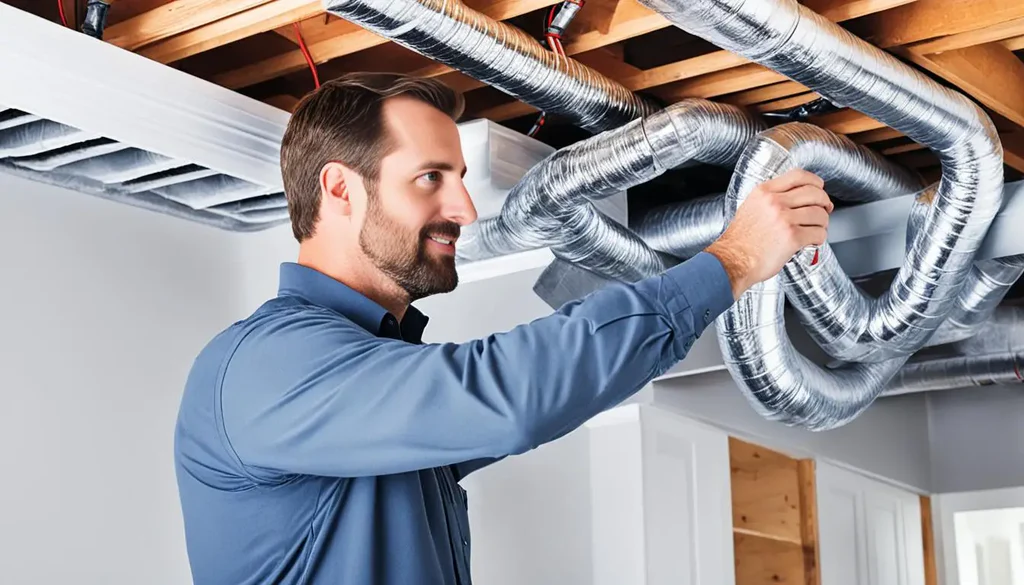
Flexible ducts are great in tight or retrofit jobs. If you’re sealing seams, coat the material with fiberglass or mesh tape before applying duct mastic to provide a durable seal.
Fiberglass flexible varieties deteriorate quicker and can start exhibiting tears after ten years.
Metal Ducts
Sheet metal, such as galvanized steel and aluminum, is the most durable standard ductwork material. Thermo‑Pan is a composite metal alternative that can provide thermal advantages.
When properly installed and maintained, metal ducts last 20 to 30 years or more and resist physical damage, fire, and pests better than alternative materials. Inspect joints for loose screws, gaps, and early indications of rust or corrosion, particularly in humid environments.
Seal and insulate metal runs to prevent heat loss and condensation. Use the right sealants and tapes. Some surfaces need fiberglass or mesh tape under mastic in order to stick.
Regular inspection and immediate remediation increase longevity and indoor air quality.
Fiberboard Ducts
Duct board is malleable and ideal where you want built-in insulation and snug custom fits. It usually lasts 10 to 20 years with maintenance.
Do not use fiberboard in humid or damp areas as it absorbs moisture, becomes soft in spots, and grows mold. Check frequently for water marks, delamination, and fungal growth.
Change earlier if you notice mold or softening to guard HVAC performance and health.
Proactive Replacement
Proactive replacement of HVAC ductwork involves replacing duct systems on a scheduled basis rather than waiting for failure. This approach decreases the likelihood of emergency repairs, enhances energy efficiency, and allows homeowners to coordinate work with other projects for minimal disruption.
Health Benefits
Proactively replace old or moldy ducts in order to reduce allergens, dust, and mold spores that are circulated through living spaces. This proactive replacement decreases the load on asthmatic or allergic occupants and reduces chronic exposure to irritants that can interfere with sleep and daily comfort.
Enhanced indoor air quality combats residual stench and lessens the burden on HVAC filters with fewer changes and less floating debris.
| Health Benefit | How it Helps | Example |
|---|---|---|
| Fewer allergens | Less pollen, dust, pet dander in airflow | Family with allergy-prone children report fewer flare-ups |
| Reduced mold spores | Lowers risk of respiratory irritation | In humid climates, mold growth in ducts often drops after replacement |
| Odor removal | Eliminates stale or musty smells from old ducts | Kitchen smells no longer spread through bedroom vents |
| Improved respiratory health | Less chronic coughing and irritation | Elderly residents experience fewer breathing issues |
Efficiency Gains
Replace for optimal performance. Install new ductwork to eliminate leaks, blockages, and collapsed sections that reduce system efficiency. Leaky ducts can cut HVAC performance by 20 percent or more, making replacement a highly economical way to reclaim lost efficiency and reduce monthly energy costs.
New ducts assist in delivering consistent temperatures and better airflow across rooms, eliminating hot or cold spots. New materials and better sealing methods minimize thermal loss and air leakage compared to older versions.
For an average single-family home, complete replacement runs between roughly 5,000 and 25,000 (same currency), but the energy savings and diminished upkeep help amortize the initial cost. Projects generally require 2 to 5 days depending on layout complexity.
Future-Proofing
Replace ducts to connect with smart thermostats and advanced HVAC to enable staging, zoning, and variable airflow. Select materials and layout that meet current and probable future building codes and energy standards so you don’t get stuck doing expensive rework down the road.
Consider planning routes and branch locations so future remodels or additions can connect without significant modification. Proactive replacement is particularly savvy in humid areas, as moisture accelerates duct degradation, and choosing corrosion-resistant materials can prolong time in service.
When well-maintained, such systems can last 20 to 25 years, but if your system is over 10 years old or presenting signs of wear, proactive replacement may be cheaper than constant repairs.
Professional Assessment
A professional assessment is the step that reveals the true state of HVAC ductwork beyond what a quick glance can show. Licensed HVAC contractors use a mix of visual checks and diagnostic tools to find hidden leaks, moisture, poor insulation, and design flaws that cause uneven heating or cooling. This evaluation sets the foundation for deciding between repair, cleaning, or full replacement of air ducts.
Plan thorough ductwork inspections from licensed HVAC contractors. Schedule inspections periodically if your HVAC system is over 10 years old, after significant renovations, or when you experience lingering comfort or air-quality issues. During the visit, anticipate a visual inspection of accessible piping and junctions, along with focused testing in difficult-to-observe locations.
Technicians will search for disconnected joints, crushed duct sections, missing insulation, rust, and obvious gaps around plenums and registers. Ask for reports outlining what’s broken, what’s inefficient, and what to do about it. Have contractors submit written reports with images, measured leakage rates, and prioritized repairs to ensure the right ductwork solutions are implemented.
A good report includes observed leaks, insulation R-values, signs of pest infestation, mold or water damage, and noncompliant materials. Use the report to evaluate various bids and to monitor work over time. Professional assessments are crucial to determine whether repair, cleaning, or complete replacement of the duct system is needed.
Technicians use tools like moisture meters to check for condensation, mold, and wet insulation. A blower door test or duct pressurization test helps quantify how much air is leaking from the system. If leaks are concentrated at a few joints, sealing and targeted repair may suffice to improve overall ductwork performance.
If duct size is incorrect, runs are severely corroded, or there are repeated blockages, replacement can be the more cost-effective long-term choice. Rely on expert HVAC services to ensure safe, code-compliant, and efficient ductwork solutions. Professionals not only diagnose but ensure repairs meet local codes, proper sealing standards, and manufacturer recommendations.
Assessments can identify the root causes of inconsistent temperatures, such as leaky ducts, poor design, undersized runs, lack of insulation, or internal obstructions, and trace rising energy bills to duct losses. Studies show leaky or poorly insulated ducts can cause energy losses of up to 30% in some homes, so fixing ducts can cut costs and reduce wear on HVAC equipment.
Proper assessment avoids needless replacement and focuses resources where they improve comfort, indoor air quality, and system lifespan, ultimately enhancing the efficiency of your HVAC operation.
Conclusion
Ducts last longer with care. Clean ducts once every 3 to 5 years. Check ducts following major HVAC alterations or when certain rooms remain hot or cold. Ductwork: Replace your ducts every 10 to 25 years, depending on the material, extent of damage, and indoor air quality. Search for obvious rust, loose seams, mold, or big leaks. Rigid metal has the greatest longevity. Flexible duct ages more quickly and tears more easily. Simple solutions, such as sealing leaks and applying insulation, can postpone replacement by years. A professional check every 2 to 4 years helps spot trouble early and gives you a clear cost estimate. For obvious next steps, book a professional inspection or get two quotes if you’re going to replace ducts soon.
Frequently Asked Questions
How often should ductwork be replaced?
Homes typically require air duct replacement every 15 to 25 years. Older systems, damage, or inefficient ducts can reduce that timeframe. Replace sooner if you notice obvious signs of malfunction or inefficiency.
What are the main signs that ducts need replacement?
Search for frequent dust in your hvac ductwork, irregular heating or cooling from inefficient ducts, foul odors, obvious rust or holes in the duct system, and excessive energy costs.
Can cleaning fix duct problems instead of replacing them?
Cleaning addresses dust and light mold but cannot resolve structural damage, serious leaks, or inefficient ducts. Change out old ducting when cleaning cannot revive airflow, efficiency, or indoor air quality.
Which duct materials last the longest?
Galvanized steel and rigid aluminum last the longest, with lifespans sometimes exceeding 20 years, while flexible ducting and thin sheet metal age faster, affecting overall hvac ductwork performance.
Will replacing ducts lower my energy bills?
Well-sized and sealed HVAC ductwork enhances airflow and overall performance, typically reducing energy consumption and improving energy efficiency in your HVAC system.
When should I get a professional assessment?
Get a pro if you see the signs above, if you have a big HVAC upgrade, or about every 5 to 10 years for preventive peeks. A technician will check for leaks, airflow, and the condition of your HVAC ductwork.
Can partial replacement or repairs be a good option?
Yes. Just repairing or replacing damaged air ducts can be cost-effective if the rest of the duct system is good. Opt for full ductwork replacement when multiple sections fail or when ducts are undersized.