
Key Takeaways
- Restricted airflow, low refrigerant and mechanical faults each lower coil temperature and cause ice buildup. Inspect filters, vents and blower operation first and replace or clean components as needed.
- Low refrigerant or leaks: Low refrigerant levels or leaks cause frost, noisy operation, and poor cooling. Have a licensed technician test pressures, repair leaks, and recharge refrigerant to prevent compressor damage.
- If the system freezes, turn the AC off and run fan-only to thaw safely. Don’t scrape coils. Check for water leaks as ice melts.
- Use my foolproof checklist to separate airflow from refrigerant problems. Weak airflow or dirty filters can be identified by hissing, bubbling, or persistent ice.
- Plan routine HVAC tune-ups, seasonal checkups, and upgrades like smart thermostats, efficient blowers, or better insulation to avoid these repeat freezes and reduce energy loss.
- Tackle that freezing fast to minimize hidden expenses, avert additional wear and tear on components, and mold-induced ailments, and keep your system firing on all cylinders and your home toasty.
AC unit freezing up causes and fixes are the typical air conditioner problems and solutions for ice on coils. Ice buildup may be a result of low refrigerant, inadequate airflow due to clogged filters or vents, or a malfunctioning blower motor.
Solutions include cleaning filters and straightening fins, examining refrigerant lines, and replacing malfunctioning fans. The body continues with troubleshooting, safety tips, and when to call a technician.
Why ACs Freeze
Frozen air conditioners can arise from a combination of flow, refrigeration, and mechanical issues that lead to the dirty evaporator coil temperature dropping to the point where water freezes. This overview will delve into the top causes, how they contribute to ice formation, and what to check to prevent or remedy these air conditioning issues.
1. Airflow Restriction
Blocked return vents, dirty air filters, and obstructed ducts reduce the amount of warm air passing over the evaporator coil. Lower airflow causes heat transfer to plummet and the coil remains colder than designed, so moisture on its surface turns to ice.
Slit, torn, and damaged air ducts that leak or collapse allow warm air to bypass the coil, producing the same effect.
Common causes of airflow restriction include:
- Furniture or curtains blocking supply or return vents
- Closed air registers and undersized duct runs
- Dirty or clogged filters and evaporator coils
- Blower fan failures or motor underperformance
Maintain vent and return airflow, replace filters and check ducts for leaks. Routine cleaning of filters and coils allows warm air to blow unobstructed and prevents ice from developing.
2. Low Refrigerant
Low refrigerant, Freon in older systems, lowers the pressure and temperature in the evaporator coil. That chill freezes moisture and builds frost and ice on the coil.
A refrigerant leak makes cooling less efficient and makes the compressor work harder, which can cause damage.
Signs and risks of low refrigerant include:
- Hissing noises or oily marks on lines suggest leaks.
- Inefficient cooling with the system running longer.
- Danger of compressor damage and expensive repairs or coil replacement.
Don’t add refrigerant without locating and fixing leaks. Keep an eye on lines and have a certified technician check pressures and recharge as needed.
3. Mechanical Faults
Blower motors, thermostats, fans, and the compressor all play a role in whether the coil remains at normal temperatures. A failing blower or broken external fan diminishes airflow or condenser heat rejection, disrupting the refrigeration cycle and leading to freeze-ups.
A bad thermostat can let the system run too long, driving the coil below freezing.
Inspect the blower assembly, fan operation, and thermostat function. Swap out old parts before they cause problems.
4. Outdoor Conditions
Outdoor temperatures below about 15°C (60℉) can disrupt AC pressure balance and cause the outdoor coil to freeze up. Heat pumps should be monitored during cold snaps and defrost mode is employed when ice develops.
Snow, debris, and insufficient insulation surrounding the condenser contribute to freezing hazard.
5. System Neglect
Skipping annual HVAC checks, neglecting to change filters, and ignoring small refrigerant leaks all increase freeze risk.
Shutting down the AC and defrosting the coil is a good first step when the ice begins to form. Routine service catches problems before they start and ensures your system runs dependably.
Initial Diagnosis
A frozen evaporator coil is more common than you think. Begin with a brief visual and sensory scan before any hands-on work: check vents for cool air, look for visible ice or frost on the indoor unit, and note whether the problem appears only in the morning or all day.
If the coils freeze overnight, the thermostat may be the culprit. Make a quick checklist to distinguish airflow issues from refrigerant issues to hasten diagnosis and prevent unnecessary fixes.
Airflow vs. Refrigerant
- Airflow restriction includes weak airflow at vents, a warm return-air grille, dirty or clogged filters, blocked return ducts, or a slow blower motor.
- Low refrigerant can cause hissing or bubbling sounds near lines, an oily residue on fittings, visible ice on the coil despite normal airflow, and persistent cold spots.
- Airflow indicators usually cover with a thin layer of ice at first and increasing accumulation. Loss of refrigerant can result in swift icing and may be associated with pressure abnormalities when gauged.
- Think filters first. Toss, hold to light, and replace if cloudy. Then check for refrigerant levels with gauges or a technician.
Nailing the right underlying reason, like a dirty evaporator coil, stops you from wasting parts and recurring freezes.
Listening for Clues
Listen tight to the air handler and condenser. Rattling or buzzing indicates loose or failing fans and motors. A constant hissing or bubbling is a hint toward a refrigerant leak.
If the blower motor doesn’t sound like it’s cycling normally or the external fan is silent and the compressor runs, airflow across the evaporator can be insufficient and ice develops.
Record the noises on a phone and replay them while reading manuals or talking to a technician. An audio sample helps them pattern match to components and accelerates diagnosis. A surprise halt of the blower mid-cycle is typically associated with rapid ice build up.
Thermostat Check
Check the thermostat mode and set temperature. If the thermostat is set too low, especially in a humid climate, this increases the risk of freeze. Frequent freezer-only freezes in the morning are usually an indication of bad thermostat logic or scheduling.
Test accuracy by comparing thermostat reading to a separate thermometer. If readings are off by a significant margin, recalibrate or replace. Old, mechanical, or improperly installed thermostats can cause the system to run too long, thereby icing the coils.
If you don’t have one, maybe upgrade to a smart thermostat that can maintain stable setpoints without crazy cycling on and off. Better control means less chance of freeze events.
If you have frozen coils, turn your AC or heat pump off and let the coil defrost. This may take a couple hours.
Immediate Actions
When an air conditioner freezes, take quick action to minimize damage and clear the coil. Turn off the refrigeration to prevent additional ice formation and safeguard the compressor. Confirm signs of a frozen unit: weak or no cool airflow, visible ice on the evaporator coil or refrigerant lines, and unusually high humidity inside.
Don’t reboot until the coil has completely defrosted and you figure out what caused the freezing.
Thaw Safely
Shut the AC down and just let the coil thaw for a few hours. Open windows or use portable fans that circulate air over the indoor unit. Air circulation speeds melting without increasing heat that might stress components.
A blow dryer on low to medium setting will help defrost. Hold it about 15 centimeters (six inches) away and keep it moving to prevent local overheating of the coil or surrounding plastic. Don’t use picks or other sharp tools to chip ice from coils because that can risk puncturing fragile fins or the refrigerant lines.
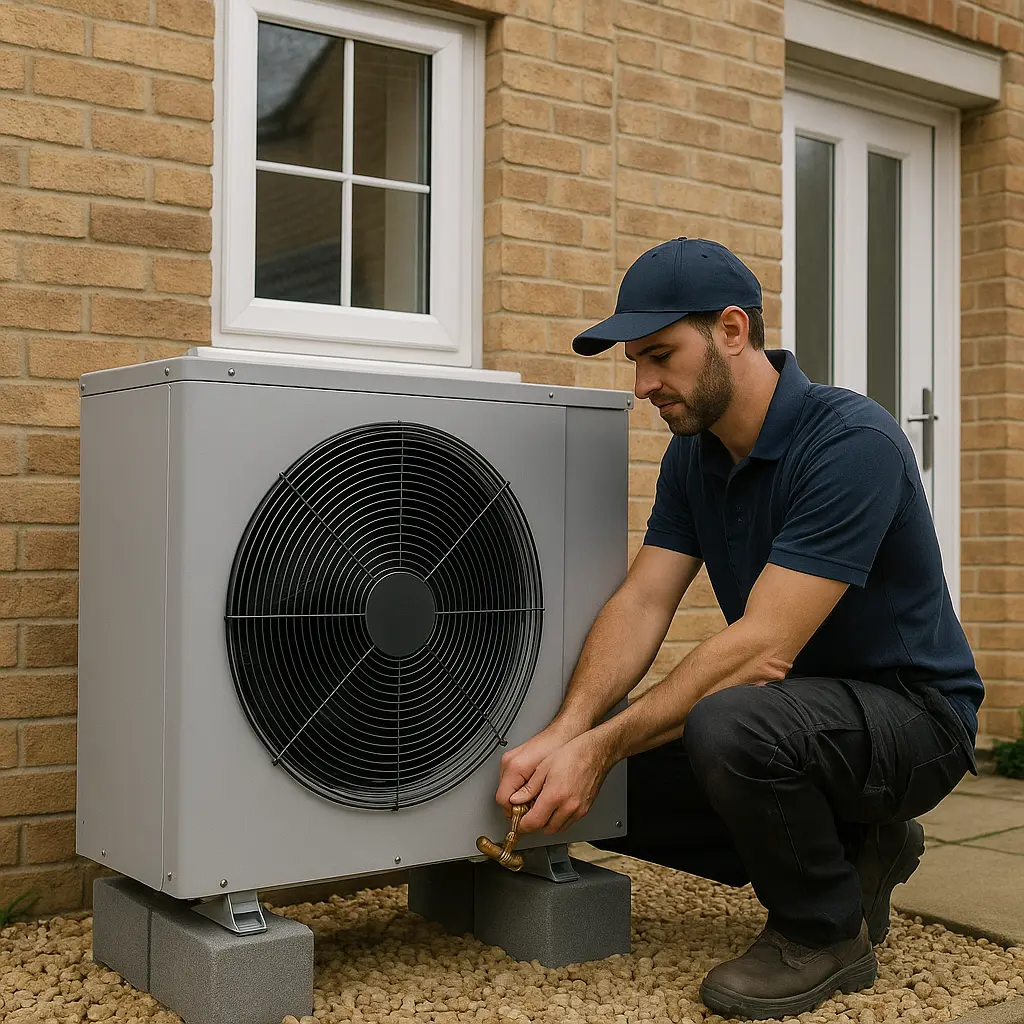
As ice melts, keep an eye out for water pooling under the air handler and mop or towel it up immediately to prevent water damage or mold growth.
Check Filters
Clean and replace air filters immediately. Dirty or clogged filters are the most common cause of restricted airflow, which causes freezing. Raise the filter to the light. If light doesn’t easily pass through, change it.
Stick with top-quality filters that fit your system and remember to change them every one to three months based on usage and home air quality. Changing a blocked filter usually gets the air flowing again and stops the problem.
If batteries operate a thermostat, attempt the obvious solution and replace them prior to further troubleshooting. A misbehaving thermostat can allow the system to run incorrectly.
Clear Vents
Walk through the home and make sure that supply and return vents are wide open and not blocked by furniture, rugs, or curtains. Clean vent covers and vacuum around registers to eliminate dust that can obstruct flow.
Inspect accessible duct runs for kinks, crushed sections, or debris that might reduce evaporator airflow. Balanced airflow throughout the system plays a vital role in stabilizing evaporator temperature.
A good rule of thumb is to keep your indoor setpoints at or above 20°C (68°F) during heavy cooling loads to minimize freeze risk. If fundamental measures don’t halt freezing, have an HVAC technician identify refrigerant leaks or insufficiencies, compressor failures, or airflow problems.
Permanent Solutions
Permanent solutions get to the heart of the causes of AC freezing instead of treating symptoms. Whether it’s a refrigerant leak, improper airflow, a dirty filter, a failing compressor, or a damaged coil, the key is to identify the issue. Long-term fixes mix localized repairs, component upgrades, deep cleaning, and system replacement where appropriate.
Prices fluctuate, but the more you spend today, the less you will typically spend on operating and emergency fixing later.
Professional Repair
Get a veteran HVAC tech to hunt down and repair refrigerant leaks or compressor or blower motor failures. A technician will check system pressures, visually inspect lines for oil stains that show leaks and employ electronic leak detectors when necessary. They need to look at both evaporator and condenser coils for concealed damage, corrosion or bent fins and inform if repairs or entire coil replacement are necessary.
Be sure to obtain written repair, coil replacement or component upgrade estimates that include parts, labor and warranty terms. Arrange follow-up visits to verify that the system achieves and maintains normal operating temperatures and to confirm that the freeze has been permanently remedied.
Deep Cleaning
Schedule a deep coil cleaning to eliminate dirt, dust, mold, and debris on evaporator and condenser coils. Use products and tools designed specifically for HVAC work, like foaming coil cleaners, soft brushes, and low-pressure rinses that won’t bend fins or force water into electrical components. Clean air ducts, blower assembly, and condensate trap as well.
Restricted airflow from any of these can reduce coil temperature and induce icing. Document the cleaning steps, chemicals used, and before and after photos for warranties and future maintenance planning. Routine maintenance, including cleanings and filter replacements every 30 to 90 days, keeps airflow consistent and minimizes the chances of refreezing.
Component Upgrades
Replace or upgrade failing parts: energy-efficient blower fans and variable-speed compressors improve airflow control and reduce the chance of the coil running too cold. Think smart thermostats to control setpoints, schedule defrost cycles, and enable remote diagnostics.
Exchange ancient air handlers, external fans, or refrigerant lines if they’re worn or improperly sized. For chronic problems, consider whether a new condenser, heat pump, or full HVAC installation might be worth the investment. Newer equipment typically uses refrigerants and controls that prevent freezing and operate more efficiently.
Talk with a licensed professional to see if one-off upgrades or complete system replacement provide the best lifetime cost and reliability.
Proactive Maintenance
Proactive maintenance involves conducting routine inspections and minor fixes to prevent breakdowns and ensure an AC unit operates efficiently. It minimizes unplanned downtime, increases equipment lifespan, optimizes energy utilization, and enhances safety.
For HVAC, your regular maintenance schedule staves off frozen coils by detecting and repairing minor problems before they escalate.
Regular Inspections
Visual inspections of evaporator and condenser coils, refrigerant lines, and connections detect dirt, ice accumulation, or oil stains that indicate leaks. Check coils for bent fins or thick dirt. Coil fouling diminishes heat transfer and can cause the evaporator to get too cold and freeze.
Inspect refrigerant lines for frost patterns and oily spots. Both of these indicate leaks or low charge.
Turn on the blower fan, air handler, and thermostat and switch through a few settings to make sure everything is working fine and blowing air. Listen for grinding, squeals or rattles and note vibration. These often lead to motor or bearing failure.
Test superheat temperature differentials across the indoor coil. An abnormally low delta can indicate airflow or refrigerant problems. Log each discovery with date, readings, and photos when able.
Address minor repairs, such as filter changes, tightening electrical connections, and straightening fins, immediately to prevent escalation into frozen coil situations.
Seasonal Preparation
Clean coils and swap filters prior to heavy-use seasons so airflow remains high and the coil surface can do its job. A clogged filter restricts airflow, reduces evaporator temperature, and promotes icing.
Swap out ordinary pleated filters every month during driving season or better yet, install higher-efficiency filters and check them on a schedule.
Insulate exposed refrigerant lines and shield outdoor condensers from snow, leaves, and falling debris. Insulation prevents thermal loss and helps the system run more stably in cold weather.
Program thermostats for sensible setpoints. Modest setpoint shifts are better than long runs at extreme temperatures. Schedule professional service in advance of peak seasons.
Technicians can verify refrigerant charge, electrical load, and do deeper coil cleaning than homeowners often can.
Smart Thermostat Use
A smart thermostat prevents runtime creep by adapting setpoints automatically and scheduling to minimize constant operation. It avoids long cycles that overcool the evaporator and encourages icing with built-in programs.
Let me turn on alerts for maintenance reminders and abnormal system behavior so problems receive prompt attention. Analyze runtime reports to identify patterns such as extended runtimes or multiple short cycles.
Both of these may indicate airflow restrictions or low refrigerant prior to freezing. Smart data informs service decisions and aids in optimizing cooling requirements.
It reduces both energy expenses and the risk of frozen components.
The Hidden Costs
Frozen coils do more than merely cease cooling. Ice build-up interferes with heat transfer and airflow, causing the unit to operate longer and less efficiently. That increases electricity consumption, adds stress to components, threatens water damage when the ice melts, and opens the door to mold formation in moist areas.
Here are the primary cost buckets to think about and actionable reminders of what to monitor and address.
Energy Waste
A frozen air conditioning unit can consume 10 to 30 percent more electricity as the compressor and blower operate longer to achieve set temperatures. Limited airflow due to dirty evaporator coils or iced evaporator coils leads to extended run times for the compressor. Additionally, low refrigerant levels make the compressor work overtime to attempt to move heat, further straining the HVAC system.
A 3.5 kW unit that normally uses 2,000 kWh per year could see an extra 200 to 600 kWh in a season with recurring freezing. At 0.20 currency units per kWh, that results in an added cost of 40 to 120. Poor care, such as neglecting air filter swaps every 1 to 3 months, exacerbates these losses.
Energy upgrades like variable-speed motors, smart thermostats, and better insulation can significantly reduce waste. Regular filter changes and professional HVAC maintenance once a season can help restore efficiency.
Component Strain
Frozen coils alter operating pressures and cause the compressor and blower motor to work harder. That additional wear shortens bearing life, strains electrical components and raises the risk of motor burnout. Freeze-thaw cycles, repeated, speed solder joint fatigue and can warp aluminum fins.
Track repair frequency. Two or more compressor or motor repairs in three years suggests replacement is more economical. Timely fixes—replacing filters, repairing leaks and charging refrigerant correctly—avoid many failures.
Emergency service calls and part replacements are expensive, and proactive maintenance minimizes those risks.
Health Risks
As coils thaw, pooled water can nurture mold and bacteria growth on coils and in ducts. Dirty evaporator coils and clogged filters reduce indoor air quality and increase the chances of allergies and respiratory problems. Immediate water cleanup after defrosting is crucial.
If wet areas are left unattended, mold can begin in 24 to 48 hours. Run dehumidifiers to quicken drying and maintain relative humidity between 40 and 60 percent to suppress microbial growth. Humidifiers might be necessary in arid areas to offset comfort.
Routine self-cleaning or replacement of filters, along with professional HVAC cleaning when mold symptoms arise, prevents costly long-term health expenses and additional system damage.
| Cost Item | Typical Range (currency units) | Notes |
|---|---|---|
| Extra seasonal energy | 40–600 | Depends on usage and local rates |
| Filter replacements | 5–30 each | Every 1–3 months |
| Coil defrost/clean service | 80–250 | Includes labor and materials |
| Compressor/motor repair | 200–1500+ | Replacement drives higher cost |
| Full HVAC replacement | 2,000–10,000+ | Unit size and efficiency vary |
Conclusion
A frozen AC stops cool air and stresses your system. Low refrigerant, poor airflow, dirty coils, or a faulty thermostat manifest quickly as ice on the evaporator. Fast checks include replacing the filter, clearing return vents, and shutting it down to defrost. These steps break the cycle. Repair leaks, clean coils, and maintain fan motors and drain lines for enduring outcomes. Routine tune-ups catch little faults before they freeze the system and inflate electric bills.
An example: a clogged attic return and a torn filter led to ice in one home. A mere filter swap and coil clean took care of it and shaved 20 percent off the run time. Schedule a professional if you come across a leak, weird noises, or frequent icing. Have your AC checked now and dodge the bigger repair bills.
Frequently Asked Questions
Why does my AC unit freeze up even when the thermostat is set to a normal temperature?
The vast majority of freezes in air conditioning systems are due to restricted airflow, such as dirty air filters and blocked vents, or low refrigerant. Both issues inhibit heat exchange, leading to a frozen evaporator coil that produces ice even at normal thermostat settings.
Can I safely remove ice from my AC coil myself?
Sure, switch off the air conditioning unit and let the ice ‘defrost’ by itself or blow a fan at it to expedite thawing. Do NOT chip ice off—this can damage the frozen evaporator coil and fins.
How long should I wait after thawing before turning the AC back on?
Wait for all ice to melt from the frozen air conditioning coils and allow the indoor coil to dry. This typically requires one to three hours; firing the air conditioning unit too soon may lead to re-freezing and damage.
Will cleaning the filter fix a frozen AC?
Occasionally, a clogged air filter chokes airflow and creates freezing in the air conditioning unit. A dirty evaporator coil is usually the culprit. Replacing or cleaning the filter often solves the problem, but check the coils and refrigerant level if freezing continues.
Could low refrigerant cause my AC to freeze?
Yes. Low refrigerant can lead to a dirty evaporator coil, causing the pressure in the evaporator coil to drop, making it colder than usual and resulting in ice formation.
How can I prevent my AC from freezing again?
Change air filters regularly, don’t block vents, and have a technician perform professional HVAC maintenance once a year to prevent issues like a frozen air conditioner.
Does a frozen AC lead to higher repair costs?
Yes. Running an air conditioning unit with a frozen coil can ruin the compressor and condenser coil. Early diagnosis and ac repair are usually less expensive than replacing major components or the entire system.