
Key Takeaways
- Heat pump supply air may only be 29 to 32 degrees Celsius and can feel cool on your skin even though the system is calling for heat, so always use a thermometer at your vents to verify the air temperature.
- Defrost cycles, low refrigerant, a stuck reversing valve, airflow restrictions, thermostat misconfiguration, and electrical or control board faults are common causes of a heat pump blowing cold air in heat mode.
- Short normal defrost cycles will cause temporarily cool air, but extended or repetitive defrosting, ice accumulation, or blowing cold air are signs of an issue that requires a check.
- We review basic solutions at the start of this list, such as thermostat settings and fan mode, replacing clogged filters, clearing vents and outdoor obstructions, and checking for visible ice or refrigerant leaks.
- For suspected refrigerant leaks, reversing valve failure, control board faults, or persistent electrical issues, have a qualified HVAC technician diagnose and repair the system.
- Maintain a basic inspection checklist and record troubleshooting steps and symptoms to facilitate quick professional diagnosis and support efficient maintenance.
A heat pump blowing cold air in heat mode means the system is not warming the space as expected. Typical reasons are low refrigerant, defective reversing valve, dirty coils, or a frozen outdoor unit. Basic airflow or dirty filters often provide easy solutions, whereas problems with refrigerant or valves require an expert to diagnose and fix. Below we discuss diagnostics, fast troubleshooting, and when to call a pro.
Perception Gap
Heat pumps suck, they blow all over you, and it feels like cool air on your skin even when heating. That occurs because human skin senses relative heat. Air from the heat pump is warmer than the room average but still below skin temperature, so it feels cool. This is typical of heat pumps, which transfer heat rather than generate hot air. That chill we feel doesn’t necessarily indicate that the system is breaking down.
Supply-air temperatures from a heat pump in heat mode typically run in the vicinity of approximately 29–32 °C (85–90 °F). Those outlet temperatures are much lower than those from a gas furnace or electric resistance heater, which typically blow 49–60 °C (120–140 °F) air. That lower supply temperature enables greater system efficiency and consistent room heating. It generates less of the instant “blast of heat” people anticipate. In colder climates, the heat pump will run longer to maintain setpoint rather than shoot out very hot air for short bursts. For instance, with an outside temperature close to 0 °C, the pump might run continuously at a moderate output, whereas a gas furnace in the same room would cycle on and off while pumping significantly hotter air during burn cycles.
Check the true supply air temperature to test system operation. Position a basic digital thermometer or infrared thermometer approximately 5 to 10 cm from the register as the unit runs in heat mode. Note the steady-state reading after 3 to 5 minutes. If you observe 29 to 32 °C (85 to 90 °F) and the room is creeping upward to setpoint, the heat pump is functioning properly. If supply air is way below that range or the unit never reaches the thermostat setting, then check refrigerant charge, airflow, outdoor unit operation and defrost cycles, or call a qualified technician.
Compare typical delivery temperatures across systems to set expectations:
| Heating system | Typical supply-air temp (°C) | Typical supply-air temp (°F) |
|---|---|---|
| Heat pump (air-source) | 29–32 °C | 85–90 °F |
| Gas furnace (mid-efficiency) | 49–54 °C | 120–130 °F |
| Electric resistance | 54–60 °C | 130–140 °F |
Examples: A home with baseboard electric heat will feel warm quickly because the air is hot, but energy use is high. A heat-pump-equipped home warms more evenly with lower outlet temperatures and less noise. Take the thermometer check, look at the comparison to the table and determine if the behavior fits the system design.
Primary Causes
About Primary Causes A heat pump blowing cold air in heat mode can be caused by some mechanical and nonmechanical issues. Here are the main culprits ranked in order of frequency and explained in detail below.
- Defrost operation or frequent defrost cycles
- Reversing valve stuck or failing
- Low refrigerant levels or leaks
- Thermostat set incorrectly or fan on “on
- Airflow restriction from dirty filters or blocked vents
- Compressor malfunction or poor installation/maintenance
- Extremely low outdoor temperature limiting heat output
1. Defrost Operation
Heat pumps defrost the outdoor coil by briefly reversing into a defrost mode, which prevents ice build-up and maintains system operation during the winter. While in this mode, the heat pump is blowing cold air inside for several minutes. Regular defrost typically cycles every hour in cold, humid conditions and usually lasts a few minutes, but this can vary by model. It’s important to keep a record of the duration and frequency of each cycle, as long or repeated defrosts may indicate common reasons for a malfunctioning sensor or low refrigerant levels.
2. Valve Failure
A reversing valve is crucial for a heat pump, as it changes the direction of refrigerant flow from heating to cooling and vice versa. If the valve is stuck or the actuator malfunctions, the heat pump is blowing cold air instead of warm air, causing it to blow out cold air when the thermostat is set to heat. Repair or replacement of the reversing valve is generally needed. A technician can diagnose the heat pump issue by taking pressure measurements and testing the valve operation.
3. Refrigerant Depletion
Low refrigerant levels can significantly hinder your heat pump’s ability to transfer heat inside your home. Leaks lead to lower pressure and poor heat transfer, often resulting in ice forming on the outdoor coil during the winter. To address this heat pump issue, check the outdoor unit for frost rings or oil stains that may indicate a refrigerant leak. Repairing the leak and recharging the system by a professional technician is essential for proper function.
4. Thermostat Misconfiguration
Thermostat failures are nonmechanical but prevalent. If your heat pump is blowing cold air or set to ‘auto’ with a narrow differential, the system can switch modes or run the fan without heat. The fan set to ‘on’ will blow all the time, circulating unheated air in between heat cycles, causing it to blow cold air in the winter. Reset the thermostat, verify that the thermostat is set correctly, and change batteries or defective units!
5. Airflow Restriction
Dirty filters, blocked grilles, or debris around the outdoor unit restrict airflow and can cause your heat pump to labor inefficiently, frequently circulating cold air during the winter. Common reasons include these factors. To ensure your heat pump is working effectively, swap filters on time, remove debris or blockages from vents and the external unit, and maintain a regular inspection list to avoid accumulation. Improper installation or maintenance will exacerbate these issues and decrease the system’s lifespan.
Electrical Issues
Electrical issues can cause a heat pump to fail to heat and blow cold air instead. Begin by disconnecting power to the unit prior to any inspection. Check the HVAC breakers. Most heat pumps have a dedicated 220 to 240 V breaker for the outdoor unit. A tripped breaker or loose connection is a common, fixable culprit. Assuming the breakers are good but the unit still blows cold, the problem could be inside controls, sensors, or wiring that require intricate diagnosis.
Control Board
A failed control board can send false signals that leave the system in cooling or fan mode only. When the board misunderstands relays, it may never turn on the compressor or reversing valve for heat, or it may bounce between heat and cool constantly. During the winter, if your heat pump is blowing cold air, check the control panel for error codes or flashing LEDs, as these sometimes indicate board faults or power issues. Record weird behaviors — random mode switching, always running, or fans that run without the compressor — and document these as well. Techs rely on these notes to help track down the problem quicker.
Inspect wiring at the control board for loose terminals, burnt insulation, or arcing. If the board gets intermittent voltage from a bad breaker or loose feed, it can malfunction. In some cases, a bad thermostat will masquerade as a board issue, as the board never receives a proper call for heat. If your heat pump is working but not blowing warm air, test the thermostat functions and replace if suspect. Control board replacement or repair is frequently technical and requires a certified HVAC technician for safe and proper work.
Sensor Fault
Temperature sensors inform the control system when to heat, so when a sensor reads too warm, the heat pump won’t switch to heat or shuts off heating early, spitting out cold air. Compare the thermostat room reading to an independent thermometer. Onboard sensors close to the coil or inside the outdoor unit can drift or fail. Some systems throw sensor fault codes; others just act up.
Sensor problems can be sporadic, generating erratic toggling between heating and cooling. Recalibrate sensors if your model supports it, or swap them out when readings remain off post-testing. Protect wire leading to sensors and check connectors for corrosion or breaks. Loose or shorted sensor wires frequently masquerade as more serious electrical problems. If you don’t know how to test or change sensors, call a pro to avoid creating additional electrical or refrigerant issues.
Thermal Limits
Heat pumps have thermal limits built in to protect from damage due to high temperatures in the compressor or motor. When those limits are reached, the control system will reduce or cease heating, and the unit can start to blow out cold air until those temperatures drop back into a safe range. This failsafe behavior safeguards parts but can appear to be a defect when users sense an abrupt loss of warmth. Thermal limits factor into automatic defrost control, compressor protection, and fan setting, so cooler supply air can result from several protective measures.
Just because the thermal limits are tripping often doesn’t mean it’s operating normally. Limited airflow due to dirty filters, blocked returns, or closed vents causes the indoor coil or heat exchanger to run hotter and trip limits earlier. A clogged air filter or low refrigerant levels can shift pressures and temperatures inside the system, leading to increased motor loads and thermal cutouts. Faulty fans or failing capacitors can cut airflow or stall compressors, causing trips back-to-back. If trips are occurring consistently, check filters, ducts, and outdoor unit clearances, and get refrigerant charge and electrical components examined.
Watch for those super short cycles where the heat pump is blowing cold air. Those cycles are a key symptom: the system may run one to five minutes, then stop or shift to blowing warm air during the same heating call. Follow the rhythm and timing. Pay attention to whether the cooler air corresponds with defrost cycles, which are usually 5 to 10 minutes and will purposely blow cooler air while the outdoor coil melts ice. If cooler air lingers after that window, or more than 6 millimeters (1/4 inch) of ice remains post-defrost, anticipate limited airflow, low refrigerant, or a defrost system malfunction.
Symptoms and possible causes related to thermal limit protection include performance drops in extreme cold, generally under −20°C, and extended sub-zero exposure reduces efficiency and comfort. A few cold-climate models manage the low temps a bit better but still lose capacity. Well-designed installation and regular maintenance practices keep systems within thermal limits and minimize nuisance tripping.
| Symptom | Possible causes |
|---|---|
| Unit runs briefly, then blows cool air | Airflow restriction (dirty filter, closed vents), failing fan motor, electrical issue |
| Cool air during short, regular intervals (~5–10 min) | Normal defrost cycles clearing outdoor coil ice |
| Ice buildup > 6 mm or persistent ice after defrost | Low refrigerant, blocked airflow, defective defrost controls |
| Reduced heat output in extreme cold | Thermal limits reached due to low ambient temperatures (below −20°C) or reduced system capacity |
| Supply air lower than expected (85–100°F typical) | Heat pump design; lower supply temps than forced-air boilers are normal |
Understanding the reasons why your heat pump is blowing cold air can help you troubleshoot effectively. If you notice that your heat pump is not blowing warm air, it may be time to service the unit and check for any underlying issues.
System Inspection
System Check-Up Next, inspect the heat pump for the most frequent culprits of cold blow in heat mode. Begin with your air filter, as it’s the easiest to inspect. A filthy or plugged filter restricts airflow and causes your system to work extra hard, which can lead to defrost or safety thresholds that cause your unit to blow cold air. Check the filter once every one to three months and replace it when it looks dark or clogged. Homeowners can pull and inspect the filter themselves, but if in doubt, just adhere to the manufacturer’s recommendation for size and type.
Then, inspect your indoor coils, vents, and returns for dust accumulation or blockage. Dust on the coils decreases heat transfer and can cause the unit to be inefficient. Observe every supply vent to verify airflow and that you are not just recirculating air in the room. Test or sense airflow at several registers. Weak flow indicates a blower, duct leak, or filter issue. Vacuum exposed dust in returns and clean vents. If you have access to ducts, check for disconnected sections or damaged insulation.
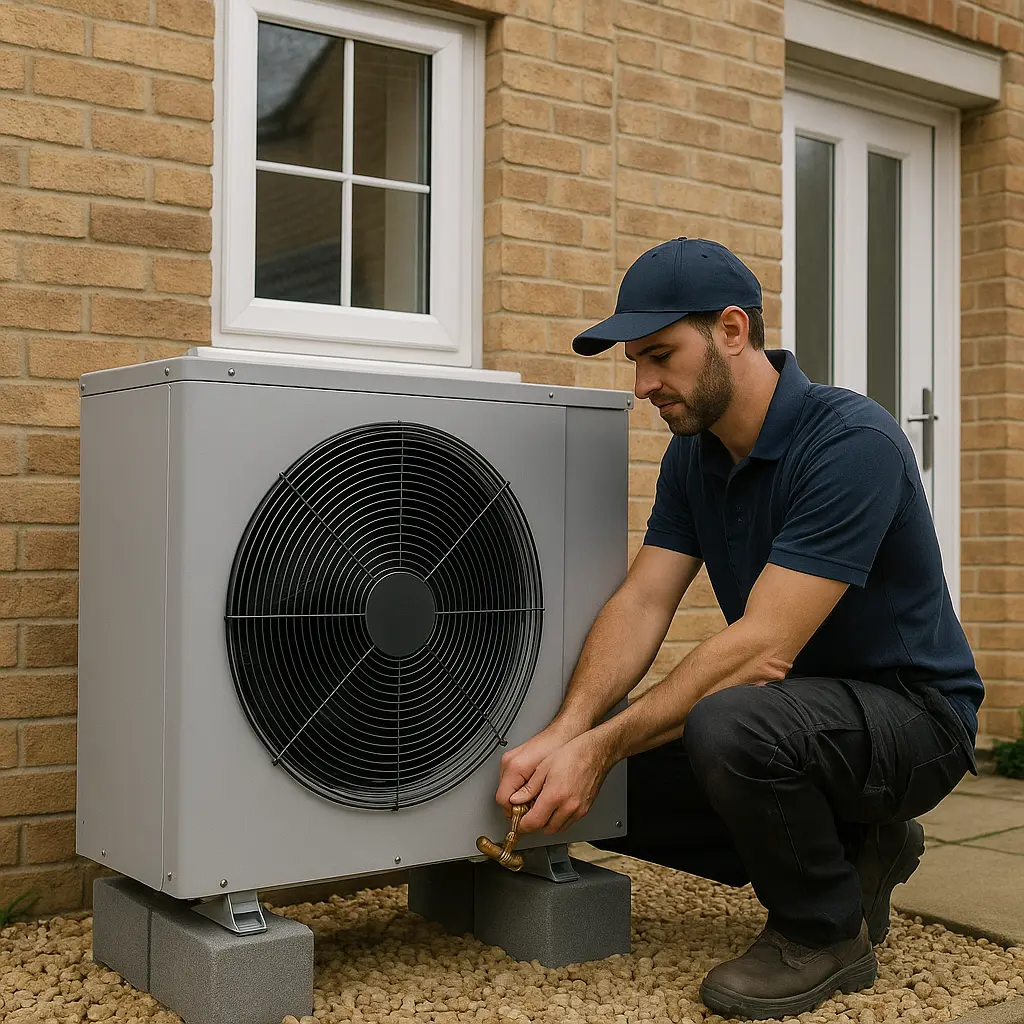
Check your outdoor unit for dirt, debris, and ice. Remove leaves, grass, and snow from at least 60 centimeters (2 feet) around the unit to maintain steady airflow. Bent fins or blocked fan blades lower capacity. Gently straighten the fins with a fin comb if necessary. In cold weather, an iced outdoor coil can be a sign of a defrost fault. If heavy ice repeatedly coats the coil, record it and have a professional service firm check the defrost control and refrigerant charge.
Inspect for any obvious physical issues, such as wear, damage, or refrigerant leaks. Oil stains, hissing, or frost on liquid lines indicate refrigerant leaks that reduce heating capacity. Loose or burnt wires at the control box, contactor, or terminal strips will cause intermittent operation. Make sure the heat pump has power and breakers aren’t tripped by checking the circuit breaker or fuse box.
Make sure the thermostat and control panel are set so that the system is in heating mode and the setpoint is correct for the season. Verify the thermostat is on heat, not auxiliary or emergency heat, unless that’s what you want. Switch out thermostat batteries and, if accessible, test by increasing the setpoint to trigger the system. Certain clever thermostats require coinciding settings for heat pumps. Make sure to check the wiring and mode settings to correspond to the unit type.
Routine maintenance keeps out many of the problems that lead to cold air output. These leave you vulnerable to missing some of the most expensive problems like refrigerant leaks, compressor wear or control failures. A few simple homeowner checks, such as the thermostat, filters, power supply and outdoor clearance, keep the system humming and minimize emergency repairs.
Expert Service
Expert service is usually required when a heat pump is blowing cold air in heat mode, as multiple difficult-to-diagnose faults can lurk behind that symptom. Refrigerant leaks compromise the system’s heat transfer capability, causing it to blow cold air during the winter. A malfunctioning reversing valve may become jammed in cooling mode, while compressors can lose capacity or burn out electrically. These issues can be difficult to identify with simple inspections and typically require a professional HVAC technician equipped with the proper gauges, tools, and protective apparel.
A qualified technician will start with a focused diagnostic sequence. The technician will verify system controls and thermostat settings, measure refrigerant pressures with metric readings, inspect the reversing valve operation, check compressor run currents and terminals, and test defrost controls and outdoor coil condition. If pressures indicate a leak, the technician will identify and repair the leak, vacuum and charge the system to the accurate refrigerant charge, and run a performance test. If the reversing valve has mechanically or electrically failed, the valve may need repair or replacement, which necessitates system evacuation and exact recharging to get the heating back on track.
Outdoor coil blockages and dirt are the most common and most fixable causes of poor heat performance. A pro cleans your condenser coil safely with approved cleaners and fin combing or replaces a badly damaged coil. Cleaning encompasses debris removal, fin straightening, and airflow and fan motor inspection. Examples include a home near trees or construction that often needs more frequent coil cleaning. Coastal homes may need corrosion checks and protective coatings.
Record keeping helps hasten diagnosis. Document the troubleshooting steps already tried: thermostat changes, filter swaps, power resets, error codes shown on the unit, and any unusual noises or cycles. Send these notes along to the technician, letting them concentrate on likely failures and not repeat tests. This can be crucial when your heat pump is not blowing warm air as expected.
Nothing like regular scheduled maintenance to decrease the likelihood of midwinter failures! A standard visit consists of checking all electrical connections and contactors, measuring amp draw on motors and compressor, verifying refrigerant levels, inspecting reversing valve operation, lubricating moving parts if applicable and testing defrost and safety controls. For older machines or those that skipped their maintenance, professional service can suggest either performing partial repairs or replacing completely. The longer you put it off, the more expensive and likely to break it becomes.
Cost worries are typical. Consider the trade-off. An early expert inspection and small repair often prevent a larger compressor replacement or full system swap later. Professional service doesn’t just get heat going again; it maximizes efficiency and provides peace of mind for homeowners, ensuring that your HVAC system is functioning optimally during the winter months.
Conclusion
Heat pump blowing cold air in heat mode? Low refrigerant, a bad reversing valve, frozen coils, or electrical faults jump out as the top suspects. Simple checks help: look for ice on the outdoor unit, listen for odd sounds, and confirm the thermostat mode and settings. Small fixes like clearing debris, replacing a clogged filter, or resetting a tripped breaker can restore the warmth quickly. For refrigerant leaks, valve faults, or complicated electrical faults, call a trained tech with heat pump experience. Regular cleaning, seasonal checks, and keeping the outdoor unit clear reduce the risk of recurring trouble. Let’s get it fixed! Schedule a certified tech or request a local HVAC pro diagnostic visit.
Frequently Asked Questions
Why is my heat pump blowing cold air in heat mode?
Is your heat pump blowing cold air during the winter? It could be that the thermostat is set incorrectly, or the heat pump is working in defrost mode. Check the outdoor unit for frost on the condenser coil and ensure it’s not blowing out cold air due to low refrigerant levels.
Could a thermostat mistake cause cold air in heat mode?
Yes. A wrong mode (cool instead of heat), incorrect thermostat settings, or faulty wiring can cause your heat pump to blow out cold air. Double-check the fan setting and replace or rewire the thermostat if necessary.
Can low refrigerant make a heat pump blow cold air?
Yes, a common reason why your heat pump is blowing cold air is low refrigerant, which diminishes heating capacity and can cause the indoor air to feel cooler than your body temperature.
Is it normal for a heat pump to blow cooler air when it’s very cold outside?
Sort of. During the winter, heat pumps can lose strength at low temperatures and may start blowing cold air. Newer units perform better in cold weather, but supplemental heat may be required below certain degrees.
Could an electrical issue cause this problem?
Yes. Bad relays, capacitors, or control boards can lead to an issue with your heat pump, preventing it from blowing warm air during the winter. An electrician or HVAC pro should diagnose and replace electrical components safely.
How does the defrost cycle affect indoor temperature?
During the winter, when your heat pump is blowing cold air, the outside unit momentarily reverses to thaw ice, causing it to blow out cold air for a short period. This is typical and usually persists for a few minutes, but if it continues, there may be an issue with your heat pump.
When should I call an HVAC professional?
Call a pro if you notice frost build-up, hear strange noises, smell burning, or if your heat pump is blowing cold air when the thermostat is set to heat. A trained technician will safely diagnose refrigerant, electrical, or component failures.