

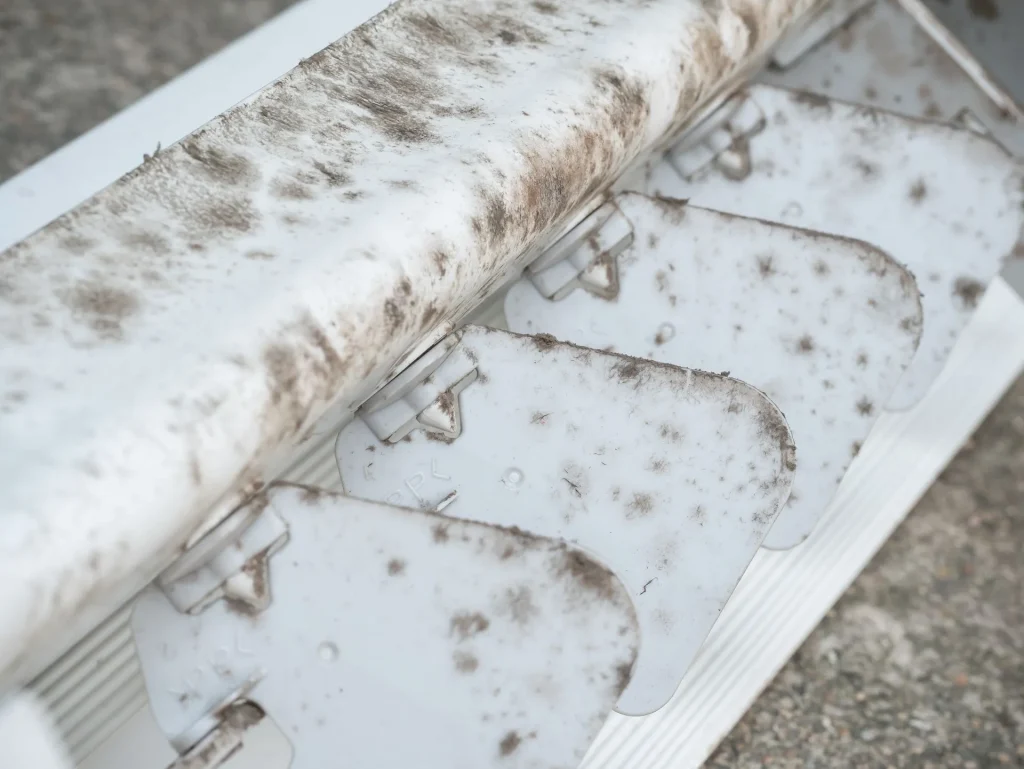
Mold grows in an air conditioner wherever moisture, warmth, and trapped dust collect – most often in the filter, on the evaporator coil, or in a clogged condensate drain. The telltale signs are a musty smell when the unit runs and fuzzy black, green, or white patches near the vents. Because the system pushes air through the whole house, those spores rarely stay in one place.
In Stockton and the wider Central Valley, air conditioners run for months of triple-digit heat, so coils stay damp and mold gets a long window to spread. This guide covers how to confirm mold, remove it safely from window and central units, prevent it from coming back, and know when to hand the job to a professional.
Why Mold Inside the AC Unit Is a Problem
Mold in your air conditioner threatens both the HVAC system itself and your household’s health. It thrives in damp environments and becomes a hidden hazard once it takes root inside an air conditioning system. The Centers for Disease Control and Prevention (CDC) warns that exposure to moldy environments can lead to a range of health effects, particularly in individuals sensitive to molds. Symptoms like stuffy nose, wheezing, and eye or skin irritation are common, while those with mold allergies or asthma may experience more severe reactions. The real danger is that these systems exist to circulate air. Once contaminated, they can spread mold spores throughout an entire home, turning a localized problem into whole-house exposure.
Beyond the health risks, mold can hurt the unit’s efficiency and longevity. It obstructs airflow and forces the system to work harder to cool your home, which drives up energy use and utility bills.
How Mold Grows Inside an AC Unit
Mold growth in air conditioners is facilitated by the very conditions these systems create and operate under. Mold spores are microscopic and enter homes through open doors, windows, and ventilation systems. You can’t eliminate every mold spore indoors, but you can keep them from finding the conditions they need to flourish. A poorly maintained air conditioner gives them the perfect breeding ground. The combination of moisture from condensation, warmth from the unit’s operation, and organic matter from dust and debris accumulating in filters and ducts creates an ideal environment for mold spores to settle, germinate, and multiply. Preventing mold hinges on controlling these factors and cleaning the system regularly.
What Mold Needs to Grow
Understanding what mold needs to grow is key to preventing it. Three elements are crucial:
- Moisture: This is perhaps the most critical factor. Air conditioners, by their operation, produce condensation which contributes to moisture buildup. Leaks or high indoor humidity levels can further exacerbate this issue by providing mold with the damp conditions it requires.
- Temperature: Mold typically flourishes in temperatures ranging from 60°F to 80°F which is generally the temperature range most comfortable for humans. This temperature combined with high humidity creates an ideal breeding ground for mold.
- Nutrients: Organic matter like dust, skin flakes, pollen, and other indoor air pollutants serve as food sources for mold. These materials can accumulate in air filters, ducts, and other components of an HVAC system as air is filtered through the system.
While air conditioners and HVAC ducts might not inherently provide a hospitable environment for mold due to their materials, the accumulation of dust and other organic particles can turn these spaces into fertile grounds for mold development. Clogged condensate drains and water droplets left in air handlers or ducts during periods of inactivity can further promote mold by supplying the moisture and nutrients it needs. This is why controlling moisture, keeping the system clean, and keeping up with AC maintenance are the keys to preventing mold.
Signs of Mold Inside the AC Unit
Catching mold early keeps it from spreading and limits the health risks. It shows up through several telltale signs, both visible and sensory:
- Musty Scent: A distinct, unpleasant musty odor emanating from your AC unit or vents when it’s running is often the first sign of mold. This smell may fill the entire home in cases of significant mold buildup within central AC systems.
- Visible Mold Patches: Look for fuzzy or slimy patches in shades of black, green, brown, white, pink, yellow, or orange on or around the unit. Black or green mold is particularly common and a clear indicator of a mold problem.
- Increased Energy Bills: An unexplained rise in energy costs can suggest that your AC unit is working harder than normal, which could be the result of mold-related blockages or inefficiencies.
- Weak Air Flow: Diminished air flow from your vents could indicate blockages within your system which could be caused by mold accumulation in the air filter.
- Excessive Condensation: Noticeable water buildup or condensation on the exterior of your AC unit may not be a sign of mold but rather a condition that is conducive for mold growth.
- Discoloration or Warping: Warped or discolored areas around ductwork or parts of the air conditioning unit may signal long-term moisture issues which are conducive to mold growth.
- Allergy-Like Symptoms: Experiencing allergy symptoms such as sneezing, coughing, or itchy eyes when the AC is running can also be a sign that mold spores are being circulated through your home.
How to Check the Coil and Drain Pan for Mold
Checking for mold in your air conditioner begins with a detailed inspection. For smaller, accessible units like window-mounted, freestanding, or wall-mounted air conditioners, start by safely unplugging the unit and removing the front or back grill to expose the filter. Inspect the filter closely for any discolorations or fuzzy stains in shades of brown, black, or green. Should the filter appear clean, proceed with a flashlight to examine the unit’s interior for any signs of mildew or mold, which might present as powdery gray or white stains.
Checking a central AC unit for mold is inherently more challenging due to the system’s complexity and the inaccessibility of many of its components. You can begin by inspecting visible areas such as supply vents, air ducts, the fan, and the exterior of the unit with a flashlight for any mold evidence. Particular attention should be paid to moisture-prone areas like evaporator coils, condensation pans, drain lines, and blower compartments where mold is likely to accumulate. Additionally, a strong musty odor around your air conditioning system can be a reliable indicator of mold presence. Given the intricacies involved in examining a central air conditioning system, engaging a professional HVAC maintenance service may be necessary for a comprehensive assessment and to confirm mold presence accurately.
How to Clean Mold Out of an AC Unit
Eradicating mold from an air conditioning unit requires a careful approach tailored to the type of system you have. Start by protecting yourself and anyone nearby: do the cleanup in a well-ventilated area. Personal protective equipment is essential. Wear non-porous gloves, a face mask, and goggles to protect yourself from mold spores which can be harmful to those with sensitivities or allergies. For non-porous surfaces within the air conditioner like metal or plastic, mold can often be removed using a household cleaner combined with physical scrubbing using a cloth or sponge. Bleach is not necessary for removing mold and, in some cases, may not be advisable due to its corrosive properties and the potential for damaging certain materials or components of your air conditioning system.
However, if mold has taken root in porous materials like wood, plaster, carpet, or upholstery within or around the unit, complete mold remediation may be challenging. In these instances, the affected items or sections will likely need to be cut out, disposed of, and replaced to ensure thorough mold removal. This measure prevents mold spores from persisting in the environment and contributing to ongoing air quality issues. Given the complexity and potential risks involved in mold removal, it may be best to seek professional assistance. HVAC professionals have the expertise and equipment necessary to safely and effectively remove mold from your air conditioning system.
Supplies Needed to Clean Mold from an Air Conditioner
Before you start cleaning mold from your air conditioner, gather the right supplies. Here are the essential items you’ll need to tackle mold in your AC unit:
- 5-gallon bucket: For preparing cleaning solutions and holding dirty water.
- Cloth: Soft cloths are useful for wiping surfaces gently but thoroughly.
- Disinfectant: Distilled white vinegar is the preferred option for killing mold spores. Bleach can work too but is not necessary and may corrode some AC components, so choose based on the material of your AC unit to avoid damage.
- Face mask: A mask will protect you from inhaling mold spores and cleaning fumes.
- Protective eyewear: To safeguard your eyes from spores and splashes of cleaning solutions.
- Latex gloves: Protects your hands from harsh chemicals and mold contact.
- Screwdriver: Needed to disassemble parts of the AC unit for thorough cleaning.
- Scrub brush: For scrubbing mold off harder surfaces.
- Vacuum: A vacuum cleaner with attachments can help remove loose mold spores and dust before wet cleaning.
- Hot water: Essential for diluting cleaning agents and rinsing cleaned surfaces.
- Mild dish soap: Adds extra cleaning power to your solution.
Step by Step Mold Cleaning Process
To effectively remove mold from your air conditioning unit and restore the air quality in your home, follow this comprehensive step-by-step mold cleaning process:
- Safety First: Turn off and unplug your air conditioner. For central AC systems, consider flipping the breaker to ensure complete safety during the cleaning process.
- Disassemble and Inspect the Unit: Carefully use a screwdriver to remove any accessible parts like filters or grilles and inspect them for mold. Discard any heavily contaminated components properly.
- Vacuum the Unit: Employ a vacuum cleaner to remove loose dust and debris from inside the air conditioner unit to prepare the surface for a more thorough cleaning.
- Prepare Cleaning Solution: Create a mold-killing solution by mixing 1 cup of distilled white vinegar with 1 gallon of water. If you prefer bleach and your unit’s materials can tolerate it, use the same ratio. You can also opt for a commercial mold removal solution that’s registered with the Environmental Protection Agency (EPA).
- Clean the AC Interior: Soak a cloth in your chosen cleaning solution and meticulously wipe down the interior of the AC unit while focusing on areas prone to mold growth.
- Let the Solution Work: Allow the cleaning solution to sit and penetrate the moldy areas for about 10 to 20 minutes.
- Rinse Thoroughly: Rinse the cleaned areas with clean water, using a clean cloth to remove any residue of the cleaning solution.
- Dry and Reassemble: Ensure the air conditioner is completely dry before reassembling any parts you’ve removed. This may require leaving the unit disassembled to air dry for a period.
- Test the AC Unit: Once reassembled, turn the AC unit back on. Monitor for any persistent musty smells or signs of mold to ensure the cleaning was successful.
This straightforward process requires careful attention to detail and adherence to safety precautions. If, after cleaning, you notice lingering odors or experience health symptoms indicative of mold exposure, it may be time to consult a professional HVAC technician for a deeper inspection and cleaning.
Eliminating Mold in a Central Air Conditioning Unit
Eliminating mold from a central air conditioning system often requires professional intervention. The Environmental Protection Agency (EPA) advises homeowners to immediately shut off their central AC system upon discovering mold, as this measure helps to halt the spread of mold spores throughout the home. The complexity of cleaning and remediating mold from ductwork stems from the extensive nature of these systems and the accessibility issues associated with reaching every contaminated area. Duct material matters too. Sheet metal ducts are easier to clean than ducts made from or lined with fiberglass, plastic, or other flexible materials.
Professional HVAC technicians are equipped with the tools and expertise required to thoroughly vacuum and clean the ductwork to ensure all mold spores are removed. While the process can be costly, especially if mold has spread extensively throughout the system, professional remediation is critical to restoring the air quality in your home and preventing health issues associated with mold exposure.
Eliminating Mold in a Window Air Conditioner
Unlike central air systems, where components may be more accessible for cleaning and maintenance, window units pose a unique challenge due to their compact design. By the time mold becomes visible on parts such as the air direction vanes or grate, it signifies a widespread problem internally that can affect the coils and evaporator. Attempting to disassemble and clean a window AC unit can be a complex task that comes with the risk of overlooking mold spores which can lead to recurrence. Unfortunately, in many cases, the presence of mold within a window unit suggests that replacement might be the most effective solution to ensure a healthy, mold-free environment.
When to Call a Professional HVAC Expert to Clean Your AC
While small mold issues in more accessible AC units like freestanding or wall-mounted systems might be a DIY job, central air conditioning systems are complex enough to demand professional attention. Trained HVAC technicians possess the expertise and equipment necessary to thoroughly access and treat all parts of the system to ensure that the mold is eradicated without causing damage to the central unit, air ducts, or vents. A professional service also sets you up for preventive maintenance checks that keep the system clean, up to date, and less prone to mold reoccurrence.
How to Keep Mold Out of the Unit
Preventing mold growth in your air conditioner is crucial for maintaining a healthy living environment and ensuring the efficiency and longevity of your unit. Here are key steps to take to prevent mold:
- Ensure window units fit tightly in the window to prevent rain and humid outdoor air from entering.
- Tilt window units slightly toward the outside for proper drainage of condensed water vapor.
- Regularly clean grates and filters in AC units to prevent dust build-up and maintain airflow.
- Verify the functionality of whole house AC unit drainage systems and direct moisture away effectively to prevent accumulation.
- Empty portable AC unit reservoirs as indicated by the auto shut-off signal and ensure they are dry before seasonal storage.
- Maintain unblocked and clean HVAC ducts and air returns for optimal air flow and moisture regulation.
- Replace air filters regularly to prevent mold food sources and airflow impediments.
- Avoid introducing moisture into the HVAC system through methods like duct cleaning, opting for dry vacuuming or wiping.
Keeping the area around your AC clean, watching for water leaks, controlling indoor humidity, and scheduling regular professional servicing round out a solid prevention plan. Do these consistently and you will sharply reduce the odds of mold growth.
Contact GS Home Services if You Are Dealing with Mold Problems
While taking proactive measures can significantly reduce the risk of mold in your air conditioning system, sometimes challenges persist. If you find yourself grappling with mold issues in your AC unit despite your best efforts, don’t hesitate to reach out to GS Home Services. Our team of seasoned HVAC technicians is equipped with the expertise and tools necessary to diagnose, address, and resolve mold-related concerns. Contact GS Home Services today for a comprehensive inspection of your HVAC system to determine if mold clean up and remediation is needed.
That musty smell when the AC kicks on is worth taking seriously, since mold in the system can affect both your comfort and your air quality. Let Greener Solutions Heating & AC inspect and clean your unit so your Stockton home breathes fresh again.