

Key Takeaways
- Use your unit age and repair history as a decision guide. Replace units older than about 10 to 15 years or those with repeated major repairs to sidestep rising operating costs and unreliability.
- Then, compare repair quotes to replacement prices using the fifty percent rule and two-year total costs to determine which is more cost effective.
- Consider system efficiency, refrigerant type, and energy savings potential when considering replacement. New units use sustainable refrigerants and have lower lifetime operating costs.
- Consider your lifestyle and future plans, such as how long you will remain in the home, your desired level of comfort, and resale value to determine if a new system’s advantages warrant the initial expense.
- With certified HVAC diagnostics and transparent estimates, separate repairable ailments from those requiring replacement. Inquire about warranties, future-proofing, and expected hidden costs.
- Keep up with service, quick small-part replacements and airflow to extend life and postpone replacement. Keep an eye on repair counts and performance over time.
Our repair or replace air conditioner decision guide assists homeowners in deciding whether to repair an existing AC or purchase a new unit. It compares repair costs, system age, energy efficiency and expected life span in simple metrics.
It features common signs that lean toward replacement, typical repair price ranges in euros, and payback estimates from efficiency improvements. The main body provides a series of stepwise checks and a quick cost-benefit checklist for practical use.
The Deciding Factors
To decide whether you should repair or replace an air conditioner, you need a transparent gaze into a few interconnected factors. Deciding factors include unit age, recent and anticipated repairs, system efficacy, refrigerant, and frequency of breakdowns.
Weigh these factors against your short-term savings for long-term value, comfort, and regulatory risks.
1. Unit Age
Consider the system’s manufacture date. Most residential a/c units last around 10 to 15 years. Older units generally are pricier to operate and break down more frequently.
If your system is over 10 and has had several major fixes, replacement should rise on the priority list. Brands are different, and although lifespans may vary, heads tend to hit 10 to 15 years and furnaces 15 to 20, so check model history when you can.
2. Repair Cost
Apply the 50% rule: if a repair costs more than half of a new unit’s price, replacement is often the smarter choice, particularly for systems older than 10 years.
Add up repair bills for the last two years. Even minor repairs and repeated fixes can accumulate, indicating that the car is becoming unreliable. Major components, such as compressors and coils, are costly to replace and can nudge repair bills over the limit.
Always get a detailed written estimate and compare it to local replacement quotes, which for central systems is usually between 3,000 and 7,000.
3. System Efficiency
Next, compare your unit’s SEER rating to new models. Systems now regularly reduce energy consumption by 20 to 40 percent, lowering your monthly bills and increasing humidity control.
It is a sign of inefficiency when you have higher utility bills, weak airflow, or uneven cooling. The upgrade can pay for itself over time in savings and improved indoor air quality.
Consider payback time. Calculate annual energy savings versus upfront cost to see when the investment breaks even.
4. Refrigerant Type
Find out what refrigerant is used. Older units might use R-22, which is being phased out and expensive to repair.
Units with up-to-date, environmentally safe refrigerants are simpler and less expensive to service and meet updated regulatory standards. If you’re replacing an R-22 unit, it can protect you from future parts shortages and inflated service expenses.
It also fits with environmental regulations impacting worldwide markets.
5. Breakdown Frequency
Track service calls from the last year to discover trends. Multiple failures indicate deeper wear or installation problems and increase lifetime ownership expenses.
Consider the hassle and lost comfort against the certainty of a new system. An easy checklist for problem type, date, tech notes, and cost helps keep comparison more transparent and facilitates a smart decision.
Financial Analysis
Financial analysis balances the immediate cost of air conditioning repair against the long-term value of air conditioning replacement to assist in making a rational decision. Below, specialized topics break down the numbers, with rules of thumb and practical steps to help homeowners navigate their options.
Upfront Costs
When considering air conditioning repair versus replacement, it’s crucial to list initial outlays such as diagnostic fees, parts, labor, refrigerant, and permit or disposal fees for removal. Minor repair costs can be as low as $90 for a thermostat change, while larger repairs, like refrigerant line work, can range from $1,500 to $3,000. In contrast, a new air conditioning system can run several thousand dollars, depending on its size and efficiency. Homeowners can expect replacement quotes ranging from USD 3,500 to 10,000, influenced by the region and the size of the system.
It’s vital to factor in the fit of matched components and ductwork. Installing a new condenser while keeping an old evaporator coil may increase the risk of failure and reduce overall efficiency. Upgrading ducts or incompatible components can significantly affect the repair decision, often nudging it toward a full ac replacement.
Factor fit matched components and ductwork. Putting in a new condenser but leaving an old evaporator coil can increase the risk of failure and decrease efficiency. Swapping out ducts or incompatible components are upgrades that add cost and can nudge a repair decision toward a full replacement.
Unexpected costs occur, such as collapsed duct sections, asbestos-containing insulation, or corroded mounting hardware. These can add hundreds to thousands. Work these into a line of contingency in the budget.
In summary, weighing the costs of ac repair against a new air conditioning system is a practical decision. Homeowners should thoroughly evaluate their options to ensure long-term value and reliable cooling for their households.
Long-Term Savings
New systems typically provide 20 to 40 percent more efficiency than older units. Translate that into annual energy savings, then calculate a payback period: initial extra cost divided by annual savings.
Example: a USD 3,000 premium for a high-efficiency unit that saves USD 600 per year has a five-year payback. Lower repair bills count. New systems typically imply reduced annual service costs and less major repair work in the initial 10 years, along with warranty coverage that can transfer risk away from the owner.
Lower monthly utility bills lower total homeownership cost over time. Factor in probable local energy price hikes when projecting those long-term savings or you will be unrealistically optimistic about the return.
Warranty duration and reliability enhance projected LTV. With manufacturers’ warranties of 10 years on major parts, out-of-pocket risk is significantly lower than the frequent repairs older units face.
Hidden Expenses
These hidden costs are repeated service calls, emergency after-hour fees, and falling indoor air quality from failing components that sap value over time. Aging systems run longer and drive up operating expenses.
Create a checklist: diagnostic fees, repeat visits, emergency premiums, duct repairs, refrigerant reclamation, disposal fees, and indoor-air improvements. Use the five thousand dollar rule: multiply system age by repair cost. If the result is over five thousand dollars, replacement is likely smarter.
Apply the fifty percent rule: if repair cost is less than fifty percent of replacement, repair may be justified. Monitor remaining warranty and prior repair history when projecting lifetime cost.
Calculate payback periods and compare with anticipated remaining life to gain a transparent financial perspective.
Technological Gains
Recent advancements in air conditioning technology have taken a sharp turn from the units of a decade or more ago. Among them are higher seasonal efficiency ratings, more even cooling, improved humidity control, and lower operating costs. Because minimum efficiency standards increased in 2023, many systems installed 10 to 15 years ago now fall short by design.
Environmentally friendly refrigerants like R-410A have taken the place of older R-22 in the vast majority of new units, enhancing efficiency and minimizing regulatory and service issues.
Smart Features
Smart thermostats and connected controls allow owners to set schedules, monitor energy consumption, and adjust settings remotely via a mobile or web portal. Remote control and geofencing can reduce run time when a home is unoccupied, waking the system up shortly before residents come back.
Energy-monitoring dashboards display real-time power draw and trends, allowing users to detect abnormal run hours or compressor issues earlier. Smart thermostats make cooling more efficient by learning occupant behaviors and shifting setpoints to reduce peak load.
They can stage compressors, work with variable-speed fans, and even utilize weather data to cut down on runtime during heavy load periods. That frequently slashes monthly bills. Swapping out a dated unit in favor of a smart-ready system usually delivers tangible savings within a year or two, depending on usage.
Integration with existing smart-home devices is generally straightforward. Most modern units work with voice assistants, home hubs, and third-party automation. Convenience features in high-end systems include zoning control, multi-stage compressor logic, demand-response compatibility, and predictive maintenance alerts.
Top smart features include adaptive scheduling, energy reports, remote diagnostics, zone-by-zone control, demand-response readiness, and alerts for filter change or refrigerant issues.
Air Quality
High-tech filtration and active air purification are standard in new air conditioning systems. High-efficiency filters, MERV-rated media, and UV or ionization add-ons reduce particulates, pathogens, and volatile organic compounds. New designs expel more even airflow through living spaces, increase whole-home air turnover, and reduce stagnation, contributing to reliable cooling for homeowners.
Humidity control is better with variable-speed compressors and dedicated dehumidification modes. More intelligent humidity handling decreases mold risk and increases comfort without overcooling, which ultimately saves energy and lowers the operating cost of the HVAC system.
Health benefits are tangible: fewer allergens, less dust, lowered pollutant load, and reduced respiratory triggers. For allergy sufferers or parents with little kids, those gains matter for more than just energy savings, making air conditioning replacement a practical decision.
When compared with older AC units, newer systems tend to filter smaller particles, keep humidity more constant, and circulate air more evenly. Older equipment might not work with high-MERV filters or fan control that is necessary to maintain enhanced filtration.
Noise Levels
Modern air conditioners operate more quietly due to sound insulated compressors, variable-speed fans and enhanced cabinet design. Less noise disturbs less sleep and makes our living environments more peaceful.
Manufacturers disclose decibel levels. A common older compressor could operate at 70 dB at 1 meter, with even new models sitting around 55 to 60 dB under comparable load. Persistent rattles, loud cycles, or increased noise over time indicate that repair is not worth the cost.
Noise complaints, frequent breakdowns, and rising energy consumption all indicate replacement according to the five-thousand-dollar rule.
Lifestyle Considerations
Lifestyle issues — figure out how your existing air conditioning system integrates into day-to-day life, then use this as a background to compare air conditioning repair versus replacement. Consider comfort, future plans, and environmental impact alongside age, repair history, and standard cost benchmarks such as the $5,000 rule.
Home Comfort
See if cooling is consistent throughout all rooms. Uneven temperatures, weak airflow, or warm pockets indicate more than one-off malfunctions. They are typically symptoms of duct problems, undersized equipment, or dying parts.
If a system has difficulty maintaining humidity below comfortable levels, occupants can feel clammy even though the thermostat indicates appropriate degrees. Newer units tend to control humidity better with variable-speed compressors and smart controls, which eliminates stormy discomfort and mold risk in humid climates.
Chronic issues lower our living experience. Rapid short cycles, deafening noise, or extended runtime without cooling reprieve warrant more than just one repair. A 12-year-old system that runs all day but never reaches setpoint likely costs more in power and causes chronic discomfort.
Replacing it may cut energy use and restore steady comfort. Items that usually tip toward replacement include ongoing humidity issues, repeated compressor failures, and rooms that remain warm after repair attempts.
Future Plans
How long you’re going to be in the home alters the equation. If you’re moving in 2 to 4 years, a single focused repair might make sense, but if you’re turning around selling, a modern high-efficiency system will make your home more attractive to buyers and worth the investment.
For owners staying longer, reduced operating costs and fewer service calls from a replacement are logical.
| Plan horizon | Likely action | Why |
|---|---|---|
| <3 years | Repair | Lower upfront cost; limited time to recoup investment |
| 3–7 years | Case-by-case | Consider age, warranty, and repair history |
| >7 years | Replace | Energy savings and comfort pay back over time |
| Home sale soon? | Likely action |
|---|---|
| Yes, within 1 year | Consider replacing if unit is old or uses R-22 |
Environmental Impact
New systems are more carbon-conscious with higher SEER ratings and low-global-warming refrigerants. Units made prior to 2010 could be using R-22. Servicing R-22 is expensive and more regulated, which typically means replacement is better than repair.
Proper disposal and refrigerant capture are important as well. Responsible contractors will reclaim refrigerant and recycle metals.
Energy efficiency reduces emissions and monthly bills. For example, swapping a 12-year-old unit for a modern inverter-driven system can lower energy use by 20 to 40 percent depending on climate and load.
Environmental factors include fewer leaks, better refrigerants, and lower lifetime emissions.
The Professional Role
Certified HVAC technicians provide calibrated knowledge that minimizes speculation when it’s time to repair or replace an AC unit. A good intro inspection eliminates unlikely causes, establishes reasonable price ranges, and defines warranty and efficiency compromises.
A number of technicians collaborate with content teams or product managers to write up reports, so reports can inform both immediate repair and longer-term decisions.
Diagnostic Accuracy
Make 100% SYSTEM evaluation assuring refrigerant charge, compressor, air flow, duct leakage, electrical and control logic. Technicians follow symptoms to root causes, not band-aid fixes.
For instance, short cycling can be caused by clogged coils, a failing capacitor or an improper refrigerant level. Take advantage of diagnostic findings to distinguish fixable issues such as a fatigued capacitor or leaky line set from systemic failures, including a locked rotor compressor or pervasive coil corrosion that tend to warrant replacement.
Professional evaluations yield line-item quotes, which make for apples-to-apples cost comparisons between fix and replace. Refrigerant gauges, clamp meters, temperature and humidity probes, pressure-temperature charts, leak detectors, and airflow capture hoods are some of the common diagnostic tools and tests used by HVAC technicians.
Honest Advice
Expect clear, unbiased recommendations tied to measurable facts: age of equipment, recent repair history, seasonal energy costs, and remaining life expectancy. Insist on transparent breakdowns: labor, parts, disposal fees, and any rebates or incentives, along with warranty terms for both repairs and new equipment.
Request written rationales so you can cross-compare several firms’ quotes. Experienced pros with research and writing experience often produce more articulate, helpful reports.
Checklist — Questions to ask your HVAC technician:
- What is the primary cause of the problem?
- Can we patch this problem now and for how long?
- What’s the out-the-door cost for repair versus replacement?
- Any efficiency gains or rebates if I replace now?
- What warranties and service plans cover this work?
These types of questions help confirm trust and make sure the decisions are based on reality, not dread.
Future-Proofing
Select fixes and upgrades that reduce the likelihood of repeat failures and enable smart home integration and future-proofing. Focus on parts and systems that work with smart thermostats, variable-speed compressors, and enhanced filtration standards.
Think in terms of long-term performance and opt for gear that features solid manufacturer warranties and local dealer support. If reliability is important, consider extended service plans as well.
Future-proofing strategies for repair and replacement:
- Repair replaceable components with OEM or equivalent quality parts.
- Upgrade to variable-speed blower motors or upgraded coils where you can.
- When replacing, size systems right and consider SEER and local codes.
- Bundle smart controls and maintenance plans to monitor performance and stop small issues from escalating.
Extending Unit Lifespan
Preventative care is what separates a short-lived air conditioning unit from a lifelong servant. Proper maintenance minimizes wear, diagnoses minor air conditioning problems before they escalate, and keeps the HVAC system’s efficiency nearer to the original design. Annual service and routine checkups tend to help systems outlast their ignored counterparts, providing long-term value.
Schedule regular ac maintenance and seasonal tune-ups to prolong your air conditioner’s useful service life.
Schedule a professional tune-up at least annually, preferably before the cooling season. A technician will want to clean coils, check refrigerant pressure, tighten electrical connections, and test safety controls. For hot or heavy-use homes, a spring and fall visit is helpful.
Maintain a basic record of these visits and service notes. For example, a family that added yearly spring checks saw steady cooling and a 10 percent drop in repair calls compared with neighbors who only called when something broke.
Replace inexpensive ac components like filters and capacitors promptly to prevent major system parts failure.
Change air filters every 1 to 3 months based on filter type and occupancy. A clogged filter makes the blower work harder, increasing energy consumption and stressing motors. Swap out small parts like capacitors, contactors, and thermostats as soon as they show wear.
These parts do not cost much, but failing ones can place stress on the compressor. For example, a failing capacitor left in place may cause a compressor to overheat, leading to a repair that costs far more than the part itself.
Maintain proper airflow and address ductwork issues to avoid unnecessary repairs.
Recommend that you have your ducts inspected and sealed, particularly at joints and transitions, to prevent lost cooled air and uneven comfort. Make sure vents aren’t blocked and return paths unobstructed.
Balance airflow where rooms run hot or cold to stop the system from short-cycling. Bad airflow increases operating pressure and reduces unit life. Sealing 15 percent of duct leakage can lower runtime and reduce the frequency of compressor cycling.
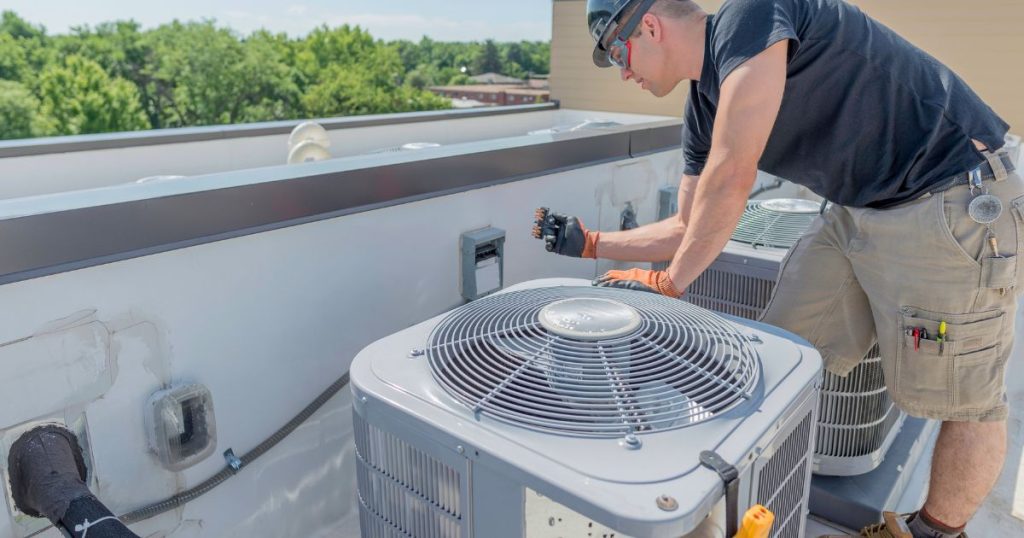
List best practices for extending the lifespan of your current air conditioning unit.
Clear outdoor units of debris and plants to ensure airflow. Use a programmable or smart thermostat to limit runtime during peak hours. Track energy consumption each month so you can detect increasing bills that might indicate efficiency loss.
Be proactive and don’t procrastinate at the first sign of diminished cooling, strange sounds, or elevated monthly energy bills. Know typical lifespans: central systems and heat pumps often last 10 to 15 years, ductless mini-splits 12 to 20, and window units 8 to 12.
If your unit is over 10 years old and exhibiting declining efficiency, repeated repairs, or catastrophic failures like a compressor failure or refrigerant leak, replacement might be the more economical option.
Conclusion
You’ve got some solid criteria to choose repair or replace for an air conditioner. Age, repair price, and energy consumption draw the most direct path. A unit under 10 years with a small, low-cost fix is often still the smart choice. A unit over 15 years with increasing repairs and declining efficiency should be replaced. Consider repair cost against a new unit’s price and anticipated energy savings. Consider quieter operation, better air quality, and smart controls as bonus points for new systems. Speak with a reputable tech and obtain a written quote. Contrast that with estimates for new installations and transparent service conditions. Ready to dig in? Get a couple or three estimates and pick the option that suits your budget and your comfort day to day.
Frequently Asked Questions
How do I know if I should repair or replace my air conditioner?
Here are some tips to help you check the age, repair cost, efficiency, and reliability of your air conditioning system. If the ac unit is older than 10 to 15 years, and the ac repair cost exceeds 50 percent of air conditioning replacement, then replacement generally makes more sense.
What is the typical payback time for a more efficient replacement unit?
Payback for a new air conditioning system depends on your climate and energy prices, typically falling within a 3 to 7 year window when considering energy savings, rebates, and reduced maintenance costs.
Can a single major repair extend my unit’s life enough to delay replacement?
A one-time major ac repair can extend the air conditioning system’s life by a few years, but multiple major repairs often signal the need for ac replacement. Consider total future repair costs and reliability before making your decision.
How do energy-efficiency improvements affect my decision?
Energy-efficient air conditioning units save you energy, reduce your utility bills, and enhance your home’s comfort. If your old AC unit is inefficient or uses outdated refrigerants, air conditioning replacement typically provides significant long-term savings.
When should I involve an HVAC professional in the decision?
Call a licensed HVAC technician whenever you’re unsure about your air conditioning system. They can provide diagnostics, give you ac repair versus replacement cost estimates, and walk you through efficiency and warranty implications.
Are there financial incentives to replace an old air conditioner?
Yes. Most areas offer rebates, tax credits, or low interest loans for efficient air conditioning units. Check for local hvac financing options to reduce your upfront cost and shorten the payback time.
How can I extend the lifespan of my existing air conditioner?
Arrange for yearly maintenance of your air conditioning system, change filters often, keep outdoor coils free of debris, and don’t ignore repair requests to avoid costly repairs and extend the ac unit’s lifespan.