

Key Takeaways
- Solar attic fans may contribute to lower peak attic temperature when exposed to direct strong sunlight. They can’t cool the attic below outdoor ambient temperature and may have limited utility during prolonged triple-digit heat.
- Just be sure to match fan output to attic volume and have adequate intake vents so that negative pressure in the attic doesn’t draw conditioned air from your living spaces.
- Anticipate shorter motor life and perhaps efficiency loss in extreme heat. Opt for quality, humidity-resistant units with brushless motors and check warranty and maintenance needs.
- Are solar attic fans worth it in triple-digit heat? Solar fans have zero monthly energy cost, but payback depends on local cooling savings, installation cost, and climate.
- Think about combining it with better insulation, a radiant barrier, passive ridge and soffit venting, or even a whole-house fan for more effective results in triple-digit heat.
- Set up right so they don’t cause roof leaks, noise, and over-ventilation in winter. Adhere to manufacturer tilt and placement directions and check with local building codes and HOA regulations.
Solar attic fans can reduce attic temperatures by 20 to 40 percent during triple-digit heat, reducing roof stress and cooling load for homes in hot climates. They operate on rooftop solar, ensuring that grid power consumption remains very low and peak daytime cooling enjoys immediate reward. Proper placement, sealed ducts, and matched intake vents enhance results. Anticipate payback differing by climate, energy cost, and home insulation. The main body goes over performance, costs, and installation tips.
Performance Realities
While solar attic fans improve indoor comfort by pushing hot air out, their impact in triple-digit heat is limited by the laws of physics, the nuances of your roof and attic construction, and sun exposure. The remainder of this section dissects thermal limits, airflow limitations, and where solar fans stand versus passive ventilation so you can evaluate real-world worth.
Thermal Limits
Solar attic fans may reduce peak attic temperatures. They cannot cool an attic below the ambient outdoor temperature. In triple digit temps, attic air will get close to outside air temperature even with fan venting because radiant heat from the roof and sun keeps pumping heat in. Fans assist in exhausting trapped hot air and minimizing heat transfer indoors, but anticipate minimal decreases at the margins, not wholesale cooling. High heat stresses electrical and mechanical components. Running 24/7 under very hot roof decks can degrade motors and shorten photovoltaic module life. Fans shut off at night and they plummet on cloudy days, so cooling is sporadic. Proper attic insulation, radiant barriers, and air sealing count more toward consistent comfort indoors than just a fan.
Airflow Constraints
Solar attic fans typically provide less CFM than electric, grid-powered fans. That restricts their air-moving capacity, particularly on the warmest days when airflow need is greatest. One fan won’t cut it for a 185 to 200 m² (2,000 ft²) attic — you’ll need several units to achieve optimal ventilation rates. That’s why intake vents need to equal exhaust capacity. Solar fans are about as good as a vacuum with a blocked hose if the intake is not ventilated. Multiply the needed CFM by your attic volume and desired air changes per hour. If soffit and ridge vent areas are restricted, installing fans is useless. Roof orientation, shading from trees, and late-afternoon cloud cover can cut your solar input and reduce fan output when it’s needed most.
Passive Comparison
Passive systems use ridge, soffit, and gable vents together with stack effect and wind. They’ve got no moving parts and require minimal maintenance. Passive pros include lower upfront cost, continuous operation day and night, and long service life. Passive cons include performance that depends on wind, temperature differential, and correct vent placement. It may not move enough air in still, hot conditions. Active (solar) pros include increased airflow during sunny periods, targeting peak heat hours, and helping with moisture control in winter. Active cons include higher upfront cost, roughly 340 to 615 currency units per fan without installation, variable output with weather, and maintenance needs. Here’s a quick reality check.
| Aspect | Passive Ventilation | Solar Attic Fan |
|---|---|---|
| Installation cost | Low | High |
| Operation hours | Continuous | Daylight only |
| Maintenance | Minimal | Moderate |
| Performance in still heat | Limited | Improved if sun and vents suffice |
| Lifespan | Long | Reduced under extreme heat |
Critical Worth Factors
Solar attic fans can reduce attic temperatures and subsequent heat transfer into the living space. Consider your attic volume, existing insulation and sealing, roof exposure, local climate, and building authority or HOA regulations prior to making your decision.
1. Airflow Balance
Good ventilation is intake and exhaust working together. If the fan exhausts more air than the soffit or gable vents admit, the attic can slip under negative pressure and suck cooled air from living spaces through ceiling cracks. Audit your current venting sizes and locations. One high-capacity exhaust can be useless if all of your soffit vents are plugged. Use a simple checklist: measure attic cubic meters, count and size intake vents, inspect baffles, and confirm unobstructed airflow paths. In unconditioned spaces such as garages or sheds, equilibrium is simpler since less conditioned space lies beneath, thus less chance of pulling in determined air.
2. Motor Longevity
Attic temps in hot weather can reach over 65 °C (150 °F) on certain roofs, which strains motors and electronics. Quality units employ brushless DC motors made for higher heat and longer life. Anticipate cheaper motors to fry sooner in triple-digit heat. Even a quick inspection and cleaning twice a year cuts dust buildup that increases motor load. Warranty differs too, with longer warranty periods typically being a sign of greater faith from the manufacturer. In practice, opt for sealed bearing and brushless motor models when your region regularly reaches extreme highs.
3. Energy Payback
Solar fans run solely on sun, so they contribute minimal to zero electricity expense on scorching days. Consider the upfront cost, mounting, and wiring against estimated cooling savings. Payback varies based on local electricity rates and the frequency with which the attic induces additional cooling load. It’s quicker in hotter climates. Provide regional examples: in a high-sun, high-rate area, payback might be three to five years; in mild climates, it could be ten years or more. Include the non-monetary value: improved comfort in upstairs rooms and reduced roof temperatures.
4. Humidity Resistance
Opt for fans with sealed housings and moisture-resistant electronics if you have coastal or humid conditions. High humidity accelerates corrosion, can damage wiring and foster mold in inadequately ventilated attics. Humidity sensors assist by operating the fan when moisture builds, not just on sunshine. Verify moisture resistance by checking IP ratings and product specifications.
5. Installation Angle
Panel tilt impacts production. Adjust the panel angle to near your latitude for optimal year-round capture, or slightly lower for summer optimization. A flat-mounted panel on a low-slope roof can underachieve compared with an angled mount. Inadequate tilt saps the fan’s power and effectiveness. Heed the manufacturer’s tilt charts for dependable results.
Financial Return
Solar attic fans alter the attic heat profile and impact costs in a number of direct manners. Upfront cost, installation, maintenance, and avoided cooling energy value all play into total cost of ownership. The following subsections dissect these elements and demonstrate how to quantify genuine savings.
Utility Bills
Better attic ventilation can reduce attic temperatures by up to 11 °C (20 °F), which in a lot of homes translates into less work for air conditioners at peak heat. That can mean fewer HVAC run times and tangible drops in monthly cooling bills in the hottest months. Savings vary. A well-insulated home with efficient windows may see modest declines, while a poorly insulated house can get larger short-term relief.
Outcomes are contingent on entire-home efficiency. If your attic is leaky or the insulation is scant, a solar fan alone won’t trim bills significantly. When your attic ventilation is supported by quality insulation and shading, the synergistic effect is more powerful. In extreme heat, the marginal value of a small fan can be restrained since the HVAC still has to compensate for heat gains through walls and glass.
Track utility bills a few months pre and post installation to help quantify impact. Look at kilowatt-hour consumption on comparable weather days and factor out changes in occupancy or thermostat settings. Even small percentage drops in cooling energy add up over multiple hot months and ease HVAC wear.
Hardware Costs
Solar attic fan units can easily go for three hundred to six hundred dollars. Professional installation generally adds labor and any roof or flashing work, with total installed cost typically climbing higher depending on roof complexity. By comparison, electric attic fans are cheaper to purchase but introduce ongoing electricity costs, and passive vents are inexpensive but depend on temperature differential and wind.
Solar models have minimal continuous energy costs since the fan is powered by rooftop photovoltaics. That takes away a nagging electricity line item and enhances returns as grid rates increase. Budget for occasional repairs. Small fans may need a motor or solar panel replacement over a decade, and flashing or mounts can need resealing after storms.
A few cost-benefit snapshots follow. It assumes an average home, a price of 300 to 600 fans, medium installation, savings on cooling concentrated in the hottest months, and the 30% RCEC.
| Item | Value (example) |
|---|---|
| Unit cost | 450 |
| Installation | 300 |
| Total upfront | 750 |
| Tax credit (30%) | −225 |
| Net cost | 525 |
| Annual cooling savings (estimate) | 100–400 |
| Payback period | ~1.3–5.3 years |
Immediate energy savings are feasible due to low initial cost and rapid commencement of operation. Rising electricity rates and reduced HVAC strain make for great long-term returns. The sum over years leads to hundreds or thousands in savings and keeps households out of increasing energy debt.
Unintended Consequences
Solar attic fans may feel like an easy solution to stifling heat. A number of unintended consequences can diminish advantages or cause new issues. Think about the fan’s installation, the attic’s construction, and the house’s usage before presuming a cooler home or big energy savings.
Incorrect installation could result in roof leaks or structural damage. Anytime you cut through a roof deck in order to mount a fan, you need flashing and sealing that corresponds with the roofing material. If the flashing is wrong or sealants fail, water can penetrate into the attic during a rain. Typical of repeated leaks, the insulation can become stained, the rafters can rot and mold can grow. On tile or metal roofs, a wrong drill or cut can crack tiles or compromise underlayment. A homeowner who chose a cheap retrofit kit on an old roof found missing fasteners and a subsequent leak after a storm, driving repair costs higher than the fan purchase.
If the attic isn’t well sealed, the fan can pull conditioned air from living spaces. Gaps around light fixtures, attic hatches, ducts or botched top plate sealing send cooled air into the attic where the fan blows it out. That adds to the air-conditioning load. In reality, leaky-attic homes occasionally experience no cooling-bill advantage and even a slight increase in electricity consumption. Insulation gaps matter more: adding or fixing insulation often yields greater heat reduction than adding a fan because a well-insulated attic slows heat gain into living spaces.
Bad mounting can cause noise problems. Loose housings, imbalanced blades or worn bearings cause fans to click, hum or vibrate. Noise isn’t just a nuisance; it can be a sign of mechanical wear that reduces motor life. Selecting a quality unit, verifying tight mounts and designing for accessible maintenance mitigate this risk.
Over-ventilation drives up heating costs in the winter. An annoying unintended consequence is that a fan running year-round or without a proper thermostat can suck heated house air into the attic during cold months, increasing heating demand. In cold climates, this reverses the cost-benefit calculus. Keep in mind that solar fans concern exhaust only. Without sufficient intake vents, they cannot sustain appropriate airflow patterns, which reduces cooling and creates negative pressure.
Effective are climate, type of roof, insulation and shading. Savings tend to be minimal, around 1 to 5 percent on cooling bills in many instances, and fans might not operate during peak AC usage if panels are shaded or improperly installed. Payback periods often range from 8 to 15 years. If not installed or maintained properly, they can create moisture issues and even reduce lifespan. Consider roof compatibility, ventilation balance and insulation requirements prior to selecting a solar attic fan.
Alternative Cooling
Alternative attic cooling solutions include radiant barriers, insulation improvements, and whole house fans. Interior versus exterior solutions: Each option functions a bit differently and complements ventilation solutions such as solar attic fans. Here’s a direct peek at what each approach does, where it helps most, and how it compares on both performance and cost.
Radiant barriers redirect heat from the roof and minimize radiant heat transfer into the attic. They consist of thin, reflective sheets attached to rafters or roof decking. In extremely hot, sunny areas like inland Southern California, radiant barriers can reduce attic temperatures and cooling load. The usual cost is fairly low for materials and installation, and they are most effective when attic insulation is already sufficient.
- Pros: * Low material cost and simple install.
- Works well in sunny climates for shading radiant heat.
- Works all year long, with no moving parts.
- Cons: * Less effective without proper attic ventilation.
- Advantages lessen in cloudy or cool regions.
- Doesn’t stop air leakage or conduction through insulation.
Insulation upgrades emphasize boosting heat resistance. Attic levels are suggested to be R-38 to R-60. This is where proper insulation comes into play and helps reduce heat in living spaces and air conditioner run time. Installing insulation solves your summer heat and winter heat loss problems simultaneously and provides a long-term answer to any ventilation system.
- Pros: * Large, measurable impact on energy bills and comfort.
- Minimizes conduction and airborne heat gains.
- Boosts all-season energy savings.
- Cons: * Higher upfront cost depending on existing insulation.
- Installation is intrusive in finished attics.
- Decreased returns if air sealing is weak.
Whole-house fans pull in cool outdoor air through open windows and push hot indoor air out through the attic to the exterior. They provide potent relief in the evenings and nights when outside temperatures fall and can almost eliminate A/C in appropriate climates.
- Pros: * Rapid cooling of living spaces when outside air is cool.
- Cheaper than running central AC for short stints.
- Easy mechanics and quick return on investment in appropriate environments.
- Cons: * Requires open windows and suitable night-time temperatures.
- Could push hot air into your attic if attic ventilation is inadequate.
- Fails on extended triple-digit days with hot nights.
Compare to solar attic fans, those units cost roughly $300 to $900 installed and yield modest cooling savings of about 1 to 5 percent, roughly $40 to $120 per year depending on rates. Solar attic fans work best in hot, sunny locations and can maintain attic temperatures just 10 to 20 degrees Celsius above the outdoors, as well as reduce winter moisture. They’re not a replacement for insulation or ventilation but can augment radiant barriers, additional insulation, or whole-house fans to make your attic and home more comfortable.
Expert Verdict
These solar attic fans can reduce whole-house cooling consumption by a small but measurable amount. Typical savings are around 1 to 5 percent for most homes, though savings can be higher when attics are poorly ventilated, homes sit under direct sun with limited shading, or local electricity costs are high. The fans draw hot air from the attic, which lowers attic temperatures and decreases the radiated heat into living areas. The magnitude of that impact varies depending on how heat transfers through your roof and ceiling.
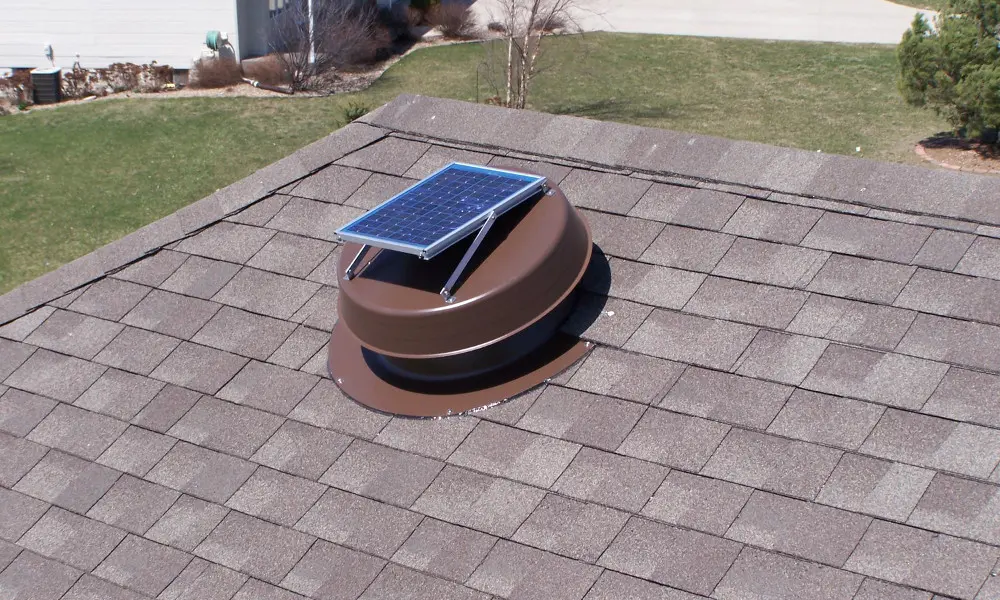
Efficiency depends on insulation, climate zone, and current airflow. In well insulated attics, the ceiling blocks a lot of heat transfer, so an attic fan circulates hot air that wouldn’t otherwise be transferring to living space. In this case, the quantifiable cooling advantage is minimal. Thin or uneven insulation, roof vents that clog, and small soffit intake can all lead to bigger attic temperature drops and more whole house impact. In hot, humid climates, the fan aids in moisture dissipation, which decreases the potential for mold and fungus growth in the attic structure.
Cost and payback are easy to compare. Standard solar attic fan setups run a higher initial cost than passive attic vents but sidestep wiring and ongoing electrical costs. Payback estimates typically fall in the eight to fifteen year range, depending on local energy rates, how effectively the fan decreases A/C runtime, and the initial purchase and installation cost. In locations with expensive power, such as those that use costly peak power, the relative value is even better because every percentage of cooling conserved adds up to more money saved. If you anticipate exiting in a few years, long payback periods make the purchase more difficult to rationalize economically.
Clear are the disadvantages and pragmatic constraints. Solar fans are not a substitute for good insulation or a comprehensive ventilation plan; they are in addition to those. On overcast days or on shadier roofs, production plummets and so does airflow. Improper placement or intake sizing can cause backdrafting by pulling conditioned air from living spaces through attic bypasses. Maintenance requirements are minimal but do involve periodic cleaning of the panel and inspection of bearings or mounts.
Best use cases: homes in climates that regularly reach triple-digit temperatures, with poor attic ventilation, modest or uneven insulation, and high local electricity costs. Practical wherever moisture management is important. Not recommended as primary mitigation in mild climates or for already well-insulated attics where returns are low.
Conclusion
Solar attic fans slash roof heat, reduce attic temps and AC load in triple-digit heat. They’re best suited for roofs with great airflow, dark shingles, and exposure to the south or west sun. Upfront cost varies by size and quality. Those with larger panels and brushless motors hold up better and move more air. Risks are increased roof penetrations and potential bad synergy with other vents. As long as they are high-quality, a solar fan goes great with ridge and soffit vents and lowers peak cooling demand by a significant number. For homes with low attic ventilation or shaded roofs, electric attic fans or a better insulation strategy may offer more value. Check your local climate data, roof layout, and the product specs before purchasing. Consult a reputable installer to get estimates and roof-safe options.
Frequently Asked Questions
Are solar attic fans effective in triple-digit heat?
Solar attic fans can reduce attic temperature by a few degrees. They’re most effective paired with quality roof ventilation and insulation. Anticipate minor gains, not replacement whole-house cooling.
Will a solar attic fan lower my indoor cooling bills?
They’ll reduce cooling bills a little by decreasing attic heat gain. Savings vary and are generally modest in triple-digit heat unless the attic was poorly ventilated previously.
Do solar attic fans work at night or on cloudy days?
No. Solar attic fans are powered by sunlight. They offer minimal to no ventilation at night or during heavy cloud cover without a battery or hybrid system.
How do I know if my attic needs a solar fan?
Examine attic temperature, ventilation balance, and insulation. If the attic is really cooking and your current vents and insulation aren’t cutting it, a solar fan will help. It’s best left to a pro roof or energy audit.
Can solar attic fans damage my roof or home?
Wrong installation — such as oversized fans and pulling from wrong locations — can cause negative pressure and pull air conditioned air from the house. Get a good installer and good balanced intake vents and you won’t have any issues.
What is the expected payback time for a solar attic fan?
Payback is often measured anywhere from a few years to more than a decade. They are worth it if your local cooling costs are high, your roof is in good shape, and the fan cools a reasonable amount of the attic heat. Consider savings to be incremental, not immediate.
Are there better alternatives to solar attic fans in extreme heat?
Yes. Better insulation, air sealing, passive ventilation (ridge and soffit vents), reflective roofing, or AC upgrades typically provide bigger and more long-lasting returns.